Home
What Is a Development Center and Which One Do You Actually Need?
A development center is a polysemous term used across three primary sectors: Early Childhood Education (Child Development Centers), Business/Technology (Startup Incubators), and Human Resources (Competency Assessment Centers). While parents seek them for play-based learning and laboratory school benefits, founders use them to scale startups, and HR professionals utilize them to map future employee potential.
The term "development center" often leads to confusion because it serves as a linguistic umbrella for vastly different services. Depending on your current life stage or professional role, you might be looking for a place to enroll your toddler, a hub to grow your software company, or a framework to evaluate your management team. According to recent search trends, the majority of users are seeking information regarding Child Development Centers (CDCs) , particularly those affiliated with educational institutions or non-profit organizations.
However, the professional definitions are equally significant. In the corporate world, a development center is a sophisticated tool for talent management. In the tech ecosystem, it is the engine room for economic growth. Understanding these distinctions is the first step in finding the specific resource that aligns with your objectives.
Are You a Parent, a Startup Founder, or an HR Professional?
To navigate this landscape, it is helpful to categorize these centers by their primary goal and target audience. Each type operates under a different set of regulations, funding models, and physical requirements. For instance, a CDC in California must adhere to strict State Department of Social Services (CDSS) licensing , whereas a tech incubator focuses on venture capital metrics.
| Type of Center | Primary Goal | Target Audience | Key Examples |
|---|---|---|---|
| Child Development Center (CDC) | Early education & family support | Children (0–5) & Parents | Campus-based "Lab Schools" |
| HR Development Center | Identifying future potential | Employees & Managers | Corporate competency hubs |
| Tech/Business Incubator | Scaling startups & innovation | Founders & Entrepreneurs | ATDC at Georgia Tech |
How Child Development Centers Provide More Than Just Daycare
A Child Development Center (CDC) is fundamentally different from a standard daycare facility. While daycare often focuses on supervision and basic needs, a CDC is built around a play-based curriculum designed to foster cognitive, social, and emotional growth. These centers typically serve children from infancy (around 8 to 12 months) through age five.
One of the defining features of a high-quality CDC is its holistic approach to family well-being. Many centers, such as those operated by Drew CDC , serve over 20,000 families annually by providing not just education, but also mental health services, food pantries, and family preservation programs. This comprehensive model recognizes that a child's development is inextricably linked to the stability of their home environment.
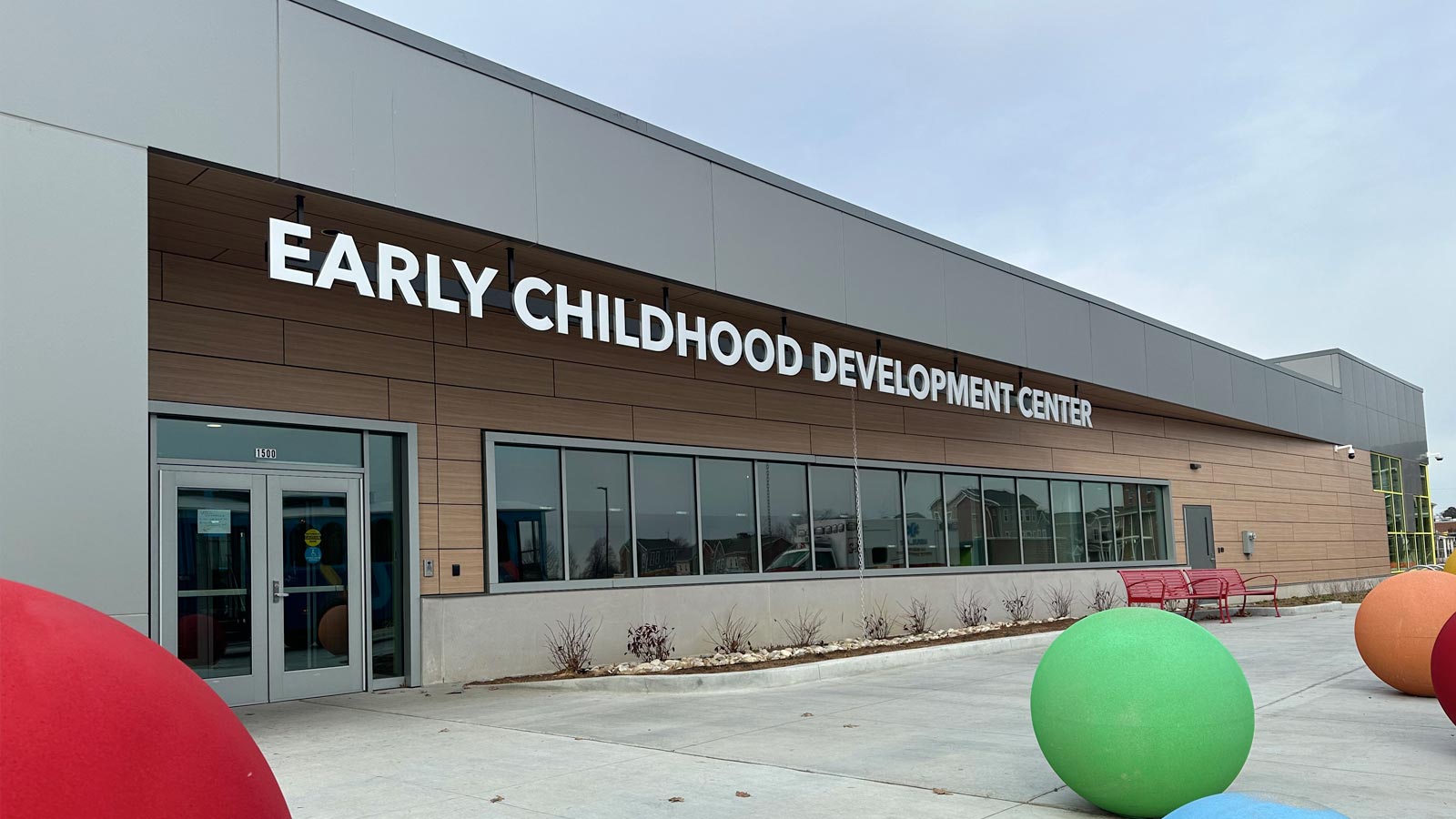
Image source: Virginia Peninsula Community College
Why Laboratory Schools Offer a Higher Standard of Care
Many of the most sought-after CDCs are "Laboratory Schools" located on college campuses, such as Los Angeles City College . These facilities serve a dual mission: providing top-tier care for children and acting as a training site for college students majoring in Child Development.
From a parent's perspective, the "Lab School" model offers a significant advantage in adult-to-child ratios . Because student-teachers are present to complete their practicum hours under the watchful eye of expert lead teachers, children often receive more individualized attention than they would in a traditional private setting. Furthermore, these centers are frequently at the forefront of educational research, implementing the latest evidence-based practices in early childhood pedagogy.
How to Qualify for Subsidized Childcare in California
For many families, the cost of high-quality early education is a major barrier. Fortunately, many campus-based centers in California offer subsidized care through contracts with the California Department of Education, specifically CCTR (General Child Care & Development) and CSPP (California State Preschool Program) .
Eligibility for these programs is generally based on two factors:
- Gross Monthly Income: Your total household income must fall below state-defined thresholds.
- Family Size: The number of dependents in the household adjusts the income cap.
What Happens Inside a Corporate Development Center?
Shifting to the professional world, a Development Center (DC) refers to a structured process used by organizations to evaluate and grow their human capital. Unlike a classroom, this "center" is often a series of simulations and assessments designed to map an individual's competencies against the requirements of future leadership roles.
Inside a corporate DC, participants might engage in "In-tray" exercises (managing a simulated inbox), group discussions where they must solve a business crisis, or role-playing scenarios with trained actors. The goal is not just to see what the employee can do now, but to identify their latent potential for growth. According to HR experts at HRK , these sessions provide a data-driven foundation for personalized career pathing.
Assessment Center vs. Development Center — What Is the Difference?
It is common to hear the terms "Assessment Center" (AC) and "Development Center" (DC) used interchangeably, but they serve distinct purposes in the HR lifecycle. The primary difference lies in the intent and the outcome of the process.
- Assessment Center (AC)
- Primarily used for selection, hiring, or promotion. The focus is on "pass/fail" or ranking candidates based on their current ability to perform a specific job.
- Development Center (DC)
- Focused on long-term growth. The outcome is a detailed Development Action Plan (DAP) that identifies training needs and future career trajectories.
While an AC might feel like a high-stakes exam, a DC is intended to be a collaborative experience where the participant receives extensive feedback from assessors to help them evolve within the company.
How Business and Tech Development Centers Scale Startups
In the realm of entrepreneurship, a development center is often synonymous with a startup incubator . These centers provide the infrastructure—both physical and intellectual—that young companies need to survive the "valley of death" in their early years.
A premier example is the Advanced Technology Development Center (ATDC) at Georgia Tech. The economic impact of such centers is staggering; the ATDC has helped its graduates raise over $3 billion in investment financing and has generated more than $12 billion in revenue. These centers offer:
- Expert Coaching: Access to seasoned entrepreneurs-in-residence.
- Corporate Pilots: Connections to large companies for product testing.
- Seed Funding: Direct grants or introductions to angel investors.
What to Look for in a High-Quality Development Center Facility
Whether you are looking at a space for children or a hub for tech innovation, the physical environment plays a critical role in success. Modern standards for development centers have shifted toward sustainability and specialized design that facilitates the specific activities occurring within.
For childcare, the "gold standard" involves facilities that are approximately 14,700 square feet , providing ample room for various age groups to have dedicated wings. According to architectural specs for LA Harbor College , high-quality centers now include "demonstration classrooms" equipped with observation windows. These allow student-teachers and researchers to observe child behavior without disrupting the natural flow of the classroom.
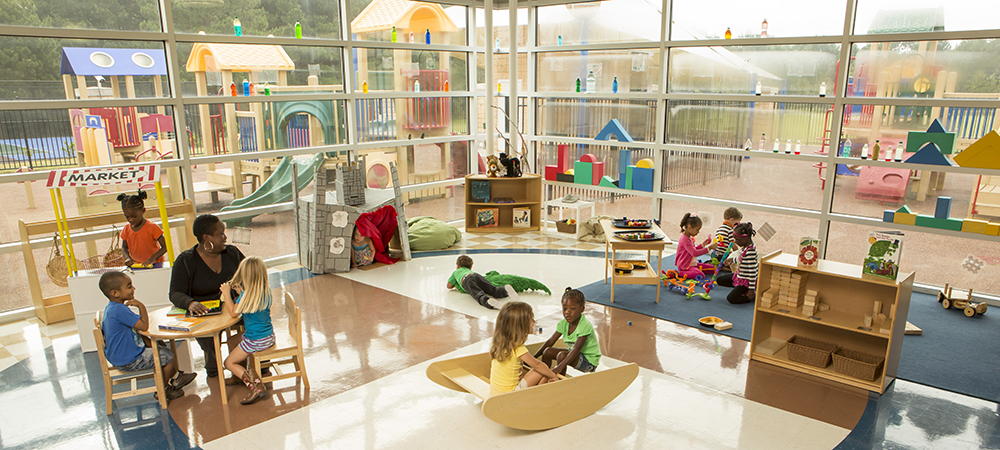
Image source: Central Georgia Technical College
Why LEED Certification and Modern Design Matter for Children
Sustainability is no longer just a buzzword; it is a health requirement. Many new CDCs are pursuing LEED Gold certification . This ensures that the building uses non-toxic materials, provides superior air filtration, and maximizes natural light—all of which have been shown to improve cognitive function and reduce respiratory issues in young children.
Key design elements to look for include:
- Wet Learning Areas: Dedicated spaces for messy sensory play (water, sand, paint).
- Observation Rooms: For safety and teacher training.
- Outdoor Classrooms: Spaces that integrate nature into the daily curriculum rather than just providing a playground.
Common Pitfalls When Choosing a Development Center
Choosing the wrong center can lead to significant logistical headaches or professional setbacks. Based on data from various campus centers, there are several "conflict flags" that parents and professionals should investigate before committing.
Some centers close as early as 3:30 PM (like LATTC), while others remain open until 5:30 PM. For working parents, this two-hour difference is critical.
Minimum enrollment ages vary wildly. Some centers accept infants at 8 months, while others require the child to be at least 2 years old.
Campus-based centers often give priority to student-parents, then faculty, and finally the community. You may be on a waitlist for months if you are in the latter group.
Frequently Asked Questions
What is the difference between a child development center and a daycare?
The primary difference lies in the educational framework. A child development center (CDC) typically employs teachers with Early Childhood Education (ECE) degrees or CDA certifications and follows a structured, play-based curriculum. Many CDCs are also "Lab Schools" that serve as training sites for college students. Daycares may focus more on basic supervision and care without the same level of academic and developmental oversight.
How much does a child development center cost?
Costs vary significantly based on location and funding. Private CDCs can cost between $1,200 and $2,500 per month. However, many campus-based centers offer a sliding scale or full subsidies (CCTR/CSPP) for low-income families. In these cases, tuition may be free or significantly reduced based on the family's gross monthly income and size.
Do I need to be a student to use a college-based CDC?
Not necessarily, but students usually receive top priority. Most college-based centers, such as LA Southwest College , open their doors to the surrounding community once student and faculty needs are met. It is advisable to join the waitlist early, as community spots are often limited.
What qualifications do CDC teachers usually have?
Teachers in high-quality development centers typically hold a Child Development Associate (CDA) credential, an Associate's degree, or a Bachelor's degree in Early Childhood Education. In "Lab School" environments, lead teachers often have Master's degrees and supervise student-teachers who are currently earning their certifications.
What is a Navy Warfare Development Center?
This is a specialized military context for the term. The Navy Warfare Development Center (NWDC) is a hub for tactical innovation and fleet training. It is not related to childcare or corporate HR, but rather focuses on developing new maritime strategies and educating naval personnel on emerging threats.
The Bottom Line
Finding the right development center requires a clear understanding of your specific needs—whether they are educational, professional, or entrepreneurial. Here are the key takeaways to guide your decision:
- Identify your intent: Determine if you need a Child Development Center, an HR Competency Center, or a Business Incubator.
- Check for "Lab School" status: For parents, these centers often provide superior adult-to-child ratios and evidence-based care.
- Verify subsidy eligibility: In California, look for CCTR and CSPP contracts to significantly reduce childcare costs.
- Distinguish AC from DC: In HR, remember that Assessment Centers are for selection, while Development Centers are for growth.
- Inspect the facility: Look for LEED certification and specialized design elements like observation windows or wet learning areas.
- Confirm operating hours: Ensure the center's schedule aligns with your work life, noting that some close as early as 3:30 PM.
Before signing any contracts, schedule a physical tour to observe the environment firsthand and ask about the specific qualifications of the staff or mentors on-site.