Home
What Are the Most Famous Landmarks in the World and How Can You Visit Them?
The world's most famous landmarks are defined by their historical significance, architectural innovation, and cultural impact. While the Eiffel Tower and Great Wall of China are widely considered among the top icons, data shows that sites like the Forbidden City in Beijing often see higher annual foot traffic. To experience these sites effectively, travelers should prioritize shoulder-season visits, book tickets at least three months in advance, and utilize professional photography techniques like shooting during the "Blue Hour."
Human history is etched into the stone, steel, and marble of our most celebrated structures. From the ancient engineering of the Giza Pyramids to the modern verticality of the Burj Khalifa, these sites serve as more than just tourist destinations; they are symbols of human ambition and cultural identity. Whether you are a student of history or a traveler building a bucket list, understanding the context behind these monuments enriches the experience of visiting them.
Why Certain Sites Become Iconic Global Landmarks
A landmark is more than just a large building or a scenic spot. To be widely regarded as a top-tier global icon, a site typically meets several criteria. According to 22places , these include historical significance, architectural uniqueness, and often, recognition by international bodies like UNESCO.
The role of UNESCO World Heritage status is particularly vital. This designation identifies sites of "outstanding universal value" and provides a framework for their preservation. For many travelers, the UNESCO seal is a primary indicator of a site's importance. However, fame is also driven by media representation, literature, and the sheer scale of the achievement.
Sites that represent a turning point in history, such as the Colosseum or the 9/11 Memorial.
Structures that pushed the boundaries of engineering, like the Taj Mahal or the Leaning Tower of Pisa.
Monuments that define a nation's spirit, such as the Statue of Liberty or the Great Wall.
While natural wonders like the Grand Canyon are landmarks in their own right, this guide focuses on man-made achievements—the monuments and structures that reflect the evolution of human civilization over thousands of years.
The Top 10 Most Famous Landmarks Every Student and Traveler Should Know
While hundreds of sites deserve recognition, ten specific landmarks consistently rank among the top in global awareness and visitor interest. These sites represent a cross-section of eras and continents.
- Eiffel Tower (France): Originally built for the 1889 Exposition Universelle, it was intended to be temporary but became the symbol of Paris.
- Great Wall of China (China): A series of fortifications spanning over 21,000 kilometers, built over two millennia.
- Taj Mahal (India): A white marble mausoleum built by Emperor Shah Jahan in memory of his wife, Mumtaz Mahal.
- Colosseum (Italy): The largest amphitheater ever built, a testament to Roman engineering and social structure.
- Statue of Liberty (USA): A gift from France to the United States, standing as a beacon of freedom in New York Harbor.
- Machu Picchu (Peru): A 15th-century Inca citadel set high in the Andes Mountains, rediscovered in 1911.
- Pyramids of Giza (Egypt): The oldest of the Seven Wonders of the Ancient World and the only one still largely intact.
- Angkor Wat (Cambodia): The largest religious monument in the world, originally dedicated to the Hindu god Vishnu.
- Acropolis of Athens (Greece): An ancient citadel containing the remains of several ancient buildings of great architectural significance, most notably the Parthenon.
- Christ the Redeemer (Brazil): An Art Deco statue of Jesus Christ in Rio de Janeiro, standing 30 meters tall.
The Eiffel Tower is not a static height. Due to thermal expansion, the iron structure can grow by up to 15 centimeters (6 inches) during the peak of summer heat. According to Kids World Travel Guide , it also features 20,000 light bulbs that sparkle for five minutes every hour on the hour after sunset.
Famous Landmarks in Europe That Define Western History
Europe is home to a high density of historic sites that have shaped Western civilization. From the ruins of the Roman Empire to the Gothic cathedrals of the Middle Ages, these landmarks offer a tangible link to the past.
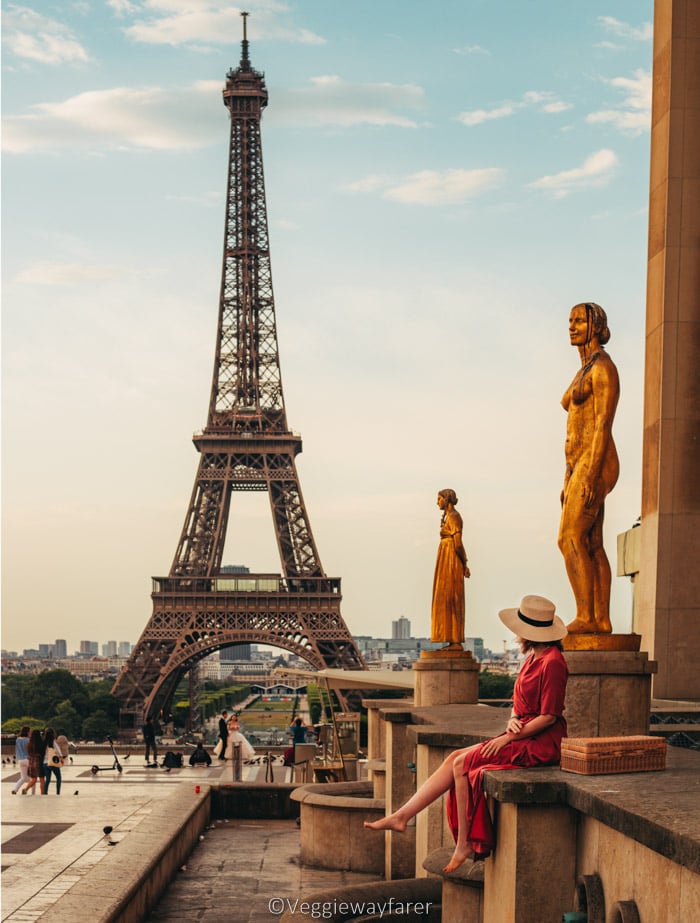
Image source: Veggie Wayfarer
How to See the Eiffel Tower Without the Crowds
The Eiffel Tower attracts approximately 7 million visitors annually. To avoid the most significant crowds, a top-rated strategy is to book tickets for the second level rather than the summit. The second level offers a more detailed architectural perspective of the city and typically has shorter wait times. For the best views of the tower itself, head to the Trocadéro across the river, especially during the "Blue Hour" just after sunset when the sky turns a deep indigo and the tower's lights begin to glow.
Why the Colosseum Remains the World’s Largest Amphitheater
Opened in 80 AD, the Colosseum holds the Guinness World Record for the largest amphitheater. It could host between 50,000 and 80,000 spectators for gladiatorial contests and public spectacles. As noted by Albom Adventures , the structure is a masterpiece of Roman concrete and stone. To visit today, it is highly recommended to arrive at opening time or book a night tour to avoid the intense Mediterranean heat and the peak midday crowds.
The Architectural Mystery of the Leaning Tower of Pisa
The tower's famous tilt began during construction in the 12th century because the foundation was laid on soft ground that could not properly support the structure's weight. Over the centuries, various engineering efforts have been made to stabilize it. In the late 20th century, a significant project removed soil from the non-leaning side, successfully reducing the tilt and ensuring the tower remains standing for future generations.
The Acropolis of Athens and the Challenge of Over-Tourism
The Acropolis represents the pinnacle of ancient Greek achievement. However, its popularity has led to significant wear and tear. Recently, authorities have implemented visitor caps to preserve the site. Travelers should consider visiting during the shoulder seasons (spring or late autumn) to experience the Parthenon without the overwhelming density of summer tour groups.
Must-See Landmarks Across Asia and the Middle East
Asia and the Middle East boast some of the oldest and most expansive landmarks on the planet. These structures often reflect the intersection of deep religious devotion and sophisticated ancient engineering.
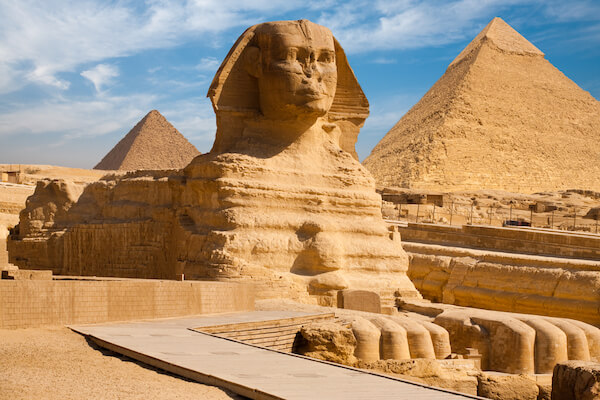
Image source: Kids World Travel Guide
The Truth About Seeing the Great Wall of China from Space
One of the most persistent myths in travel is that the Great Wall of China is visible from the moon or outer space with the naked eye. This has been explicitly debunked by astronauts; the wall is too narrow and its color blends too closely with the natural terrain. However, its scale remains remarkable. Spanning over 21,196 kilometers, it is a complex system of walls, trenches, and watchtowers built to protect the Chinese Empire from northern invasions.
Why the Taj Mahal’s Minarets Lean Outward
The Taj Mahal is widely regarded as one of the most beautiful buildings ever created. A fascinating architectural detail is that its four minarets lean slightly outward. This was a deliberate engineering choice: in the event of a catastrophic earthquake, the towers would fall away from the central dome rather than crushing the main mausoleum. This foresight has helped preserve the site for nearly 400 years.
Angkor Wat and the Legacy of the Khmer Empire
Located in Cambodia, Angkor Wat is the world’s largest religious monument. Originally built as a Hindu temple for the Khmer Empire, it gradually transformed into a Buddhist site. The scale of the complex is immense, covering over 160 hectares. For photographers, a top-tier tip is to use a wide-angle lens at the lily ponds during sunrise to capture the perfect reflection of the five central towers.
The Pyramids of Giza as the Last Standing Ancient Wonder
The Great Pyramid of Giza was the tallest man-made structure in the world for nearly 4,000 years. Built as tombs for the pharaohs, these structures are over 4,500 years old. They remain a focal point of archaeological study, with new chambers and internal structures still being discovered using modern scanning technology.
Iconic Landmarks in North and South America
The Americas offer a blend of ancient indigenous sites and modern monuments that reflect the region's diverse history and rapid development.
The Best Way to Photograph the Statue of Liberty for Free
While many tourists pay for expensive pedestal or crown tours, a highly recommended logistical hack is to take the Staten Island Ferry . The ferry is free and passes directly by Liberty Island, providing a perfect side-profile view of the statue for photography without the cost or the long security lines of the official tour boats.
Exploring the Ancient Engineering of Machu Picchu
Machu Picchu sits at an altitude of nearly 8,000 feet. The site features more than 200 structures, including temples, residences, and agricultural terraces. The precision of the Inca stonework—where stones are fitted together so tightly that a knife blade cannot pass between them—remains a marvel of pre-Columbian engineering. Due to its popularity, Inca Trail permits must often be booked six months in advance.
The 9/11 Memorial and the Art of Respectful Visiting
Some landmarks serve as sanctuaries for reflection. The 9/11 Memorial in New York City is a poignant example. A beautiful and heartbreaking detail is the placement of a single white flower on a victim's name on their birthday. When visiting such sites, it is essential to maintain a quiet, respectful decorum, treating the area as a place of remembrance rather than a traditional tourist attraction.
Chichen Itza and the Mayan Calendar
The El Castillo pyramid at Chichen Itza is a physical representation of the Mayan calendar. Each of the four sides has 91 steps, which, when combined with the top platform, equals 365—one for each day of the year. During the spring and autumn equinoxes, the sun creates a shadow that looks like a serpent slithering down the stairs.
Modern Marvels and Rising Landmarks of the 21st Century
The definition of a landmark continues to evolve as modern engineering reaches new heights. In recent years, several new structures have joined the ranks of the world's most celebrated sites.
Image source: Kids World Travel Guide
The Statue of Unity and the Shift in Global Tourism
Located in Gujarat, India, the Statue of Unity is currently the world's tallest statue, standing at 182 meters. Since its completion, it has seen a surge in popularity, attracting over 5 million visitors in 2023 alone. This reflects a broader trend where modern engineering is creating new "bucket list" destinations outside of the traditional Western hubs.
Burj Khalifa and the Future of Vertical Architecture
The Burj Khalifa in Dubai is the tallest man-made structure ever built. It represents a significant step forward in vertical engineering, utilizing a "buttressed core" design to support its record-breaking height. Visiting the observation deck provides a view that is few alternatives match, offering a perspective of the desert and the Persian Gulf from over 800 meters in the air.
Which Landmarks Are Actually the Most Visited?
Fame and visitor numbers do not always align perfectly. While the Eiffel Tower is often cited as the most famous, raw data from Wikipedia shows that other sites see significantly more foot traffic.
| Landmark Name | Location | Annual Visitors (Approx) | Primary Draw |
|---|---|---|---|
| Forbidden City | Beijing, China | 17,000,000+ | Imperial History |
| St. Peter's Basilica | Vatican City | 11,000,000+ | Religious Significance |
| Eiffel Tower | Paris, France | 7,000,000 | Iconic Architecture |
| Statue of Unity | Gujarat, India | 5,000,000+ | World Record Height |
| Colosseum | Rome, Italy | 4,000,000+ | Ancient History |
This discrepancy often occurs because sites like the Forbidden City serve as major domestic tourism hubs for large populations, whereas the Eiffel Tower relies more heavily on international travel. Understanding these numbers helps travelers plan for crowd density and ticket availability.
How to Photograph Famous Landmarks Like a Professional
Capturing a unique image of a site that has been photographed millions of times requires a deliberate approach. According to Digital Photography Monitor , professional results come from timing and perspective.
- Use a Super-Wide Lens: A 15mm lens is a top choice for structures like the Brooklyn Bridge or the interior of cathedrals, as it allows you to capture the entire scale while adding a dramatic sense of depth.
- The "Blue Hour" Strategy: The 30 minutes after sunset provide a deep blue sky that contrasts beautifully with the warm artificial lights of a monument. This is widely regarded as one of the best times for architectural photography.
- Find the Alternative View: Instead of standing where everyone else is, look for framing opportunities through archways, reflections in puddles, or distant viewpoints that place the landmark in the context of its environment.
- Long Exposure for Motion: At sites with traffic, like the Arc de Triomphe, use a tripod and a long exposure to turn car headlights into streaks of light, adding a sense of modern energy to the historic scene.
Key Takeaways for Your Next Landmark Adventure
- Verify UNESCO status to understand the global historical importance of the site before you arrive.
- Book tickets 3-6 months in advance for high-demand locations like Machu Picchu or the Eiffel Tower summit.
- Prioritize shoulder seasons (spring and autumn) to avoid the peak crowds and extreme weather of summer.
- Use the Staten Island Ferry for a free, high-quality view of the Statue of Liberty.
- Respect "Sanctuary" rules at sites like the 9/11 Memorial by maintaining a quiet and somber tone.
- Shoot during the Blue Hour to capture professional-grade photos with balanced natural and artificial light.
- Debunk common myths , such as the Great Wall's visibility from space, to better appreciate the actual engineering.
Start your journey by selecting one region and researching the specific entry requirements and best visiting hours for its primary landmarks.
Frequently Asked Questions
- What is the most visited landmark in the world?
- While the Eiffel Tower is often called the most visited paid monument, the Forbidden City in Beijing consistently records higher annual visitor numbers, often exceeding 17 million people. The distinction usually depends on whether you are counting paid entries, free public access, or specific categories like "palaces" versus "monuments."
- Which famous landmark is the oldest?
- The Pyramids of Giza in Egypt are the oldest of the major world landmarks still standing today. The Great Pyramid was completed around 2560 BC, making it over 4,500 years old. It is the only member of the original Seven Wonders of the Ancient World that remains largely intact.
- Can you see the Great Wall of China from the moon?
- No, this is a common misconception. Astronauts have confirmed that the Great Wall is not visible to the naked eye from the moon. Even from low Earth orbit, it is very difficult to see without aid because its width is relatively small and its colors blend in with the surrounding mountains and soil.
- What is the difference between a landmark and a monument?
- A landmark is a recognizable natural or man-made feature used for navigation or as a symbol of a place. A monument is a specific type of landmark created to commemorate a person or event. While all monuments are landmarks, not all landmarks (like the Leaning Tower of Pisa, which was built as a bell tower) are monuments.
- Are all famous landmarks UNESCO World Heritage sites?
- Most of the world's most celebrated landmarks are UNESCO sites, but not all. UNESCO status requires a rigorous application process and proof of "outstanding universal value." Some modern landmarks, like the Burj Khalifa, have not yet been designated, while others may be protected by national laws instead.
- What is the best time of year to visit European landmarks?
- The shoulder seasons of April to May and September to October are widely considered the top times to visit. During these months, the weather is generally mild, and the massive crowds of the summer holidays have either not yet arrived or have already departed, making for a much more pleasant experience.