Home
What Is a Flat White and How Does It Differ From a Latte?
A flat white is an espresso-based beverage consisting of a double shot of espresso (or ristretto) topped with a thin, integrated layer of microfoam. Unlike a latte, which is larger and has a thicker foam cap, a flat white is typically served in a 5–6 oz vessel with a 5mm layer of glossy, "wet paint" textured milk. It offers a stronger coffee-to-milk ratio, making it a top choice for those who want a creamy texture without masking the flavor of the beans.
Defining the Core Characteristics of a Flat White
To understand the flat white, one must first look beyond the simple combination of coffee and milk. In the specialty coffee world, the flat white is defined by its specific texture and volume. While a standard latte might range from 8 to 12 ounces, the flat white remains compact, usually served in a 150ml to 200ml (5–7 oz) ceramic cup. This smaller volume ensures that the double shot of espresso remains the protagonist of the drink, rather than being diluted by a large quantity of steamed milk.
The term "flat" is not a reference to a lack of foam, but rather a contrast to the "dry" or "airy" foam found on a traditional cappuccino. In a cappuccino, the milk is stretched significantly to create a stiff, bubbly head that sits on top of the liquid. In a flat white, the milk is steamed to a microfoam consistency. According to Wikipedia's documentation on the beverage , this microfoam consists of thousands of microscopic bubbles that are so small they are invisible to the naked eye. The result is a liquid that looks like glossy house paint and has a velvety mouthfeel that coats the tongue.
Another critical distinction is the integration. In many cafes, a latte is prepared by pouring steamed milk into espresso and then spooning a layer of foam on top. A flat white requires a more technical pour. The barista must "fold" the microfoam into the espresso from the beginning, creating a seamless, homogenous mixture. This technique, often referred to as a "free pour," is what allows for the intricate latte art that has become synonymous with the drink. The goal is a uniform brown crema-colored surface with a small, brilliant white dot or heart in the center.

Image source: Presto Coffee Roasters
Exploring the Historical Origins and the Third Origin Theory
The history of the flat white is a subject of intense debate between Australia and New Zealand. Most coffee historians point to the mid-1980s as the era of its birth. In Sydney, Alan Preston claims to have coined the term at his Moors Espresso Bar in 1985, allegedly inspired by "white coffee: flat" drinks he saw in Queensland during the 1960s. Meanwhile, in Wellington, New Zealand, Derek Townsend is often credited with perfecting the steaming technique at DKD Cafe around the same time. New Zealanders argue that their version, which is slightly smaller and more concentrated, is the authentic iteration of the drink.
However, a fascinating "Third Origin" theory has emerged in recent years, suggesting the term may have roots in post-WWII Britain. Documentary evidence, including the 1963 British film Danger by My Side , features a character ordering a "flat white." This suggests that the terminology existed in the UK decades before the Antipodean boom, likely referring to a standard coffee with milk that lacked the frothy head common in Italian-style espresso bars. While the modern microfoam technique is undoubtedly a product of the 1980s specialty movement, the name itself may be a linguistic relic of an earlier era.
Regardless of its exact birthplace, the flat white remained a regional secret for nearly two decades. It wasn't until the late 2000s that it migrated to London's independent coffee shops, fueled by the "Aussie invasion" of baristas moving to the UK. From there, it spread to New York and eventually became a global phenomenon when Starbucks added it to their permanent menu in 2015 . Today, it is widely considered one of the most popular espresso drinks in the world, serving as a bridge between the intensity of a cortado and the milkiness of a latte.
Technical Comparisons Between Popular Espresso Drinks
For the home barista or the curious consumer, the differences between a flat white, latte, and cappuccino can feel subtle. However, when broken down by volume, foam depth, and milk texture, the distinctions become clear. The flat white occupies a unique space that prioritizes the espresso's flavor profile while maintaining a luxurious texture.
| Feature | Flat White | Latte | Cappuccino | Cortado |
|---|---|---|---|---|
| Typical Size | 5–6 oz (150–180ml) | 8–12 oz (240–350ml) | 6 oz (180ml) | 4 oz (120ml) |
| Espresso Base | Double Shot / Ristretto | Single or Double | Single or Double | Double Shot |
| Foam Depth | ~5mm (Microfoam) | ~10mm (Steamed) | ~15mm+ (Dry/Airy) | Minimal (<2mm) |
| Milk Texture | Wet Paint / Glossy | Silky / Liquid | Stiff / Bubbly | Lightly Steamed |
| Vessel Type | Ceramic Cup | Glass or Large Mug | Ceramic Cup | Small Glass (Gibraltar) |
As shown in the table, the flat white is significantly more concentrated than a latte. While a latte might use 10 ounces of milk for a single shot of espresso, the flat white uses roughly 4 to 5 ounces of milk for a double shot. This creates a much higher coffee-to-milk ratio, which is why the quality of the espresso beans is so vital. In a latte, the milk can hide the flaws of a mediocre roast; in a flat white, there is nowhere for bitterness or sourness to hide.
Step by Step Guide to Crafting the Perfect Flat White
Making a flat white at home requires precision, particularly in the milk steaming process. Many home machines struggle to produce the necessary steam pressure for true microfoam, but with the right technique, you can achieve results that rank among the top cafe-quality pours. According to Meraki's guide to home brewing , the secret lies in the two-phase steaming process: stretching and folding.
1. The Espresso Foundation
Start by pulling a double shot of espresso. Aim for a 1:2 ratio (e.g., 18g of coffee grounds yielding 36g of liquid espresso) in about 25 to 30 seconds. If you prefer a sweeter, less bitter profile, consider pulling a ristretto shot, which uses the same amount of coffee but less water, resulting in a shorter, more intense extraction. The espresso should have a healthy layer of crema, as this provides the "canvas" for your milk pour.
2. The Stretching Phase
Pour cold milk into your pitcher, filling it to just below the start of the spout. Submerge the tip of the steam wand just below the surface and turn it on. For the first 2 to 3 seconds, you want to hear a sound similar to paper tearing. This is "stretching" the milk—introducing air to create volume. For a flat white, you only want to stretch the milk very slightly. If you stretch for too long, you will end up with the thick foam of a cappuccino.
3. The Folding Phase
Once you have introduced a small amount of air, tilt the pitcher slightly and submerge the wand deeper to create a vortex (a whirlpool). This "folds" the air bubbles into the liquid, breaking them down into microscopic microfoam. Continue this until the pitcher is almost too hot to touch—ideally between 60°C and 65°C (140°F–150°F). Going beyond this temperature will scald the milk, destroying its natural sweetness and ruining the texture.
4. The Final Pour
Before pouring, tap the pitcher on the counter to pop any stray large bubbles and swirl it vigorously. The milk should look like glossy, melted ice cream. Start your pour from a height of about 3 inches, aiming for the center of the espresso. This allows the milk to dive under the crema. As the cup fills, bring the pitcher closer to the surface to allow the white microfoam to rest on top, creating your desired pattern.
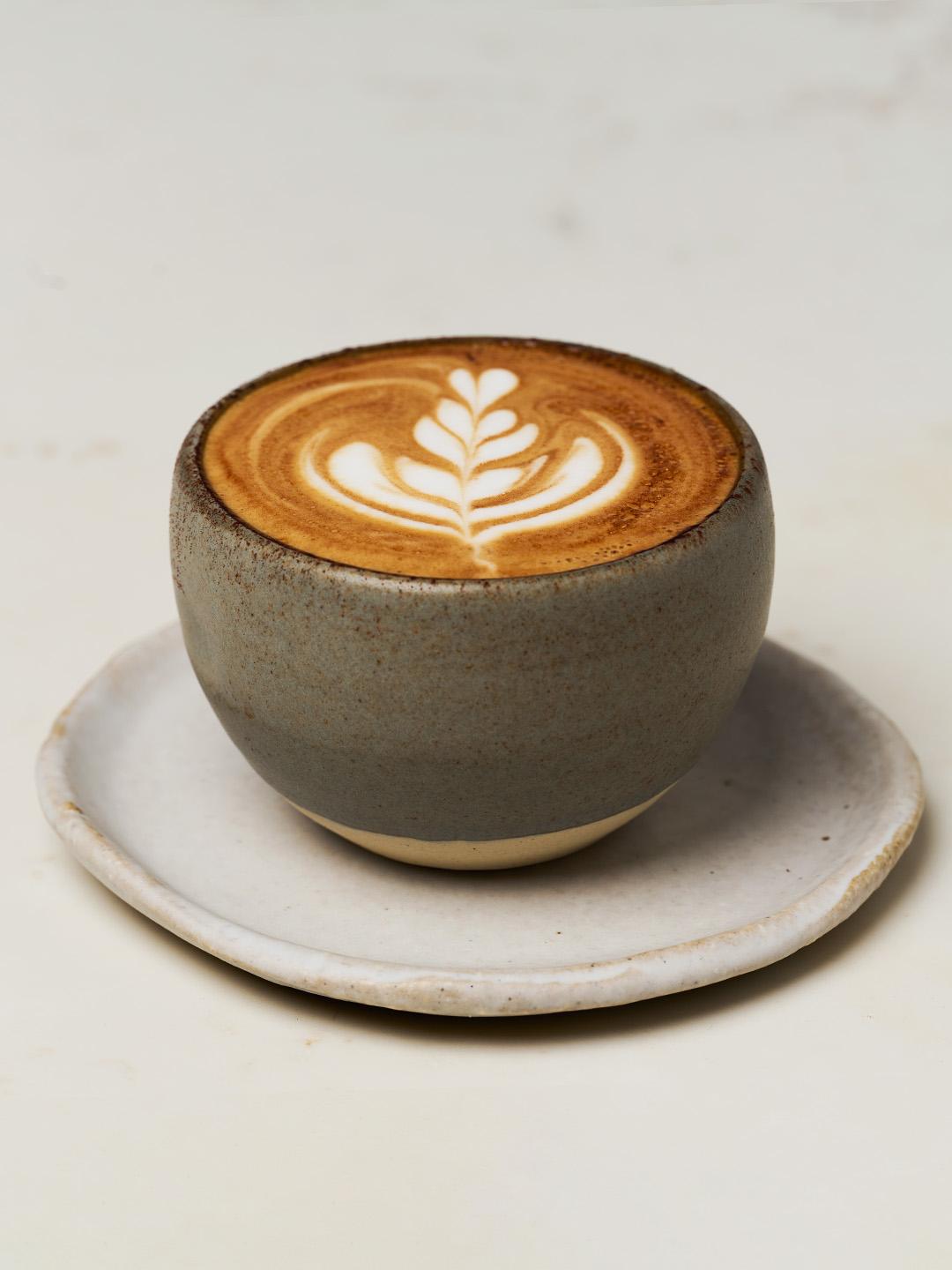
Image source: Breville
Solving Common Flavor and Texture Problems
Even with high-end equipment, achieving the perfect balance of flavor and texture can be challenging. Many home baristas encounter the "Bitter/Smoky Paradox," where a coffee that tastes excellent as a black Americano becomes unpleasantly bitter when turned into a flat white. This is often due to the milk temperature. When milk is heated above 70°C, the lactose breaks down and the proteins denature, creating sulfurous compounds that clash with the coffee's acidity.
Another common issue is "faked" microfoam. If you are using a handheld frother or a French press to foam your milk, you may find that the foam separates quickly, leaving you with a watery coffee topped by a dry, stiff head. To fix this, you must "groom" the milk. After frothing, transfer the milk between two pitchers several times. This helps to emulsify the air and liquid, creating a more stable microfoam that mimics the results of a professional steam wand.
"The most common mistake in flat white preparation is over-stretching the milk. If the foam is thick enough to be scooped with a spoon, it is no longer a flat white; it is a small latte or a cappuccino."
Checklist for Flat White Success
- Use fresh, locally roasted beans (ideally a medium roast).
- Ensure your espresso machine has reached full operating temperature.
- Purge your steam wand before and after every use.
- Use a thermometer to ensure milk stays between 60°C and 65°C.
- Swirl the espresso in the cup before pouring to break up the crema surface.
- Clean your equipment immediately to prevent milk protein buildup.
Understanding Regional Variations and Chain Coffee Standards
As the flat white has traveled the globe, it has adapted to local tastes and commercial requirements. In Australia, the drink is traditionally served in a 200ml ceramic cup, often with a handle. In New Zealand, the preference leans toward a slightly smaller 175ml vessel, which provides a more intense coffee experience. These Antipodean standards are widely regarded as the benchmark for specialty coffee shops worldwide.
However, the version served at major international chains often differs significantly. For example, a "Tall" flat white at Starbucks is 12 ounces—nearly double the size of a traditional Australian pour. To compensate for this extra volume, chains often use ristretto shots . A ristretto is a "short" shot of espresso made with the same amount of coffee but half the water. This provides a punchier, sweeter flavor that can stand up to the larger volume of milk used in commercial settings. While purists may argue that a 12-ounce drink is simply a small latte, the use of ristretto shots and microfoam texture helps it maintain the flat white identity.
In the United States, the flat white is often confused with the Cortado . While both are small, milk-based espresso drinks, the Cortado is typically smaller (4 oz) and uses a 1:1 ratio of coffee to milk with almost no foam. The flat white, by contrast, uses a 1:2 or 1:3 ratio and requires the specific 5mm microfoam layer. Understanding these nuances is essential for ordering the drink you actually want when visiting different cafes.
Final Thoughts on Mastering the Flat White
The flat white represents the perfect intersection of technical skill and sensory balance. It is a drink that celebrates the nuances of specialty espresso while providing the comforting creaminess of perfectly textured milk. Whether you are a home enthusiast or a cafe regular, understanding the mechanics of this beverage will significantly enhance your coffee experience.
- Focus on the ratio: A true flat white should always maintain a high coffee-to-milk ratio, typically served in a 5–7 oz vessel.
- Texture is everything: Aim for "wet paint" microfoam with a depth of exactly 5mm; avoid the dry, stiff foam of a cappuccino.
- Temperature matters: Keep your milk between 60°C and 65°C to preserve sweetness and prevent bitterness.
- The "Third Origin" context: Remember that while Australia and New Zealand popularized the drink, its roots may stretch back to 1950s London.
- Choose your shots: Use a double shot of espresso or a double ristretto to ensure the coffee flavor isn't lost.
- Integrate the pour: Fold the milk into the espresso from the start to create a seamless, velvety mouthfeel.
To start your journey, try adjusting your milk steaming time by just two seconds today to see how it transforms the texture of your morning cup.
Frequently Asked Questions
Is a flat white stronger than a latte?
In terms of concentration, yes. A flat white typically uses the same amount of espresso (a double shot) as a latte but significantly less milk (5–6 oz vs 8–12 oz). This results in a much stronger coffee flavor per sip. However, the total caffeine content is usually the same if both drinks use a double shot of the same beans.
Can I make a flat white with oat or almond milk?
Yes, though the results vary by milk type. Oat milk is widely considered one of the best plant-based options for a flat white because its protein and fat content allow it to produce a stable microfoam similar to dairy. Almond milk often "splits" when it hits the acidic espresso or creates a foam that is too dry for a proper flat white texture.
Why is my flat white foam so bubbly?
Bubbly foam is usually the result of "over-stretching" the milk or not creating a strong enough vortex during the folding phase. If you hear the "paper tearing" sound for more than 3 seconds, you are introducing too much air. Ensure you tilt the pitcher to get the milk spinning in a whirlpool, which will break those large bubbles down into microfoam.
What is the difference between a flat white and a cappuccino?
The primary difference is the foam texture and depth. A cappuccino has a thick layer (15mm+) of dry, airy foam that sits on top of the milk. A flat white has a very thin layer (5mm) of microfoam that is integrated throughout the drink. Additionally, a flat white is usually slightly smaller and has a stronger coffee taste.
Do I need a special machine to make a flat white?
While a professional espresso machine with a high-pressure steam wand is ideal, you can achieve similar results with a home machine. The key is the ability to create microfoam. If you don't have a steam wand, you can use a French press by pumping the plunger rapidly in warm milk to create a surprisingly effective microfoam texture.