Home
What Is It Like to Live and Shop in Tustin Legacy?
Tustin Legacy is a 1,600-acre master-planned community built on the former Marine Corps Air Station (MCAS) Tustin. It offers a modern "live-work-play" environment featuring diverse residential tracts like Columbus Square and Greenwood, anchored by The District shopping center and the specialized Legacy Magnet Academy . While it provides high-end amenities and new construction, residents should account for Mello-Roos taxes and ongoing development phases extending through 2029.
How the Former Marine Corps Air Station Became a Modern Hub
The transformation of the former Marine Corps Air Station (MCAS) Tustin into Tustin Legacy represents one of the most significant urban redevelopment projects in Orange County. Spanning approximately 1,600 acres within Tustin—with an additional 95 acres extending into the City of Irvine—this site has evolved from a critical military installation into a vibrant residential and commercial ecosystem. According to the City of Tustin , the project was designed to balance the region's need for housing with the preservation of its unique historical identity.
The 1,600-Acre Transformation
Since the base officially closed in 1999, the city has worked to implement a master plan that integrates thousands of homes, millions of square feet of commercial space, and expansive public parks. The scale of the project is difficult to overstate; it is essentially a "city within a city." The development is partitioned into specific "villages" and districts, each serving a distinct purpose in the broader community framework.
Military Heritage and the Blimp Hangars
The skyline of Tustin Legacy is defined by two massive, wooden blimp hangars. These structures, built during World War II, are among the largest freestanding wooden buildings in existence. While the North Hangar suffered significant damage in a 2023 fire, the South Hangar remains a towering reminder of the site's history as a hub for anti-submarine patrol blimps. This heritage is woven into the community's branding, with street names and park themes often nodding to the site's aeronautical past.
The "Live-Work-Play" Philosophy
The core objective of Tustin Legacy is to reduce the need for long commutes by placing essential services, employment hubs, and recreation within walking or biking distance of residential areas. This philosophy is evident in the placement of The District lifestyle center adjacent to high-density apartments and the proximity of the Advanced Technology & Education Park (ATEP) to local housing tracts.
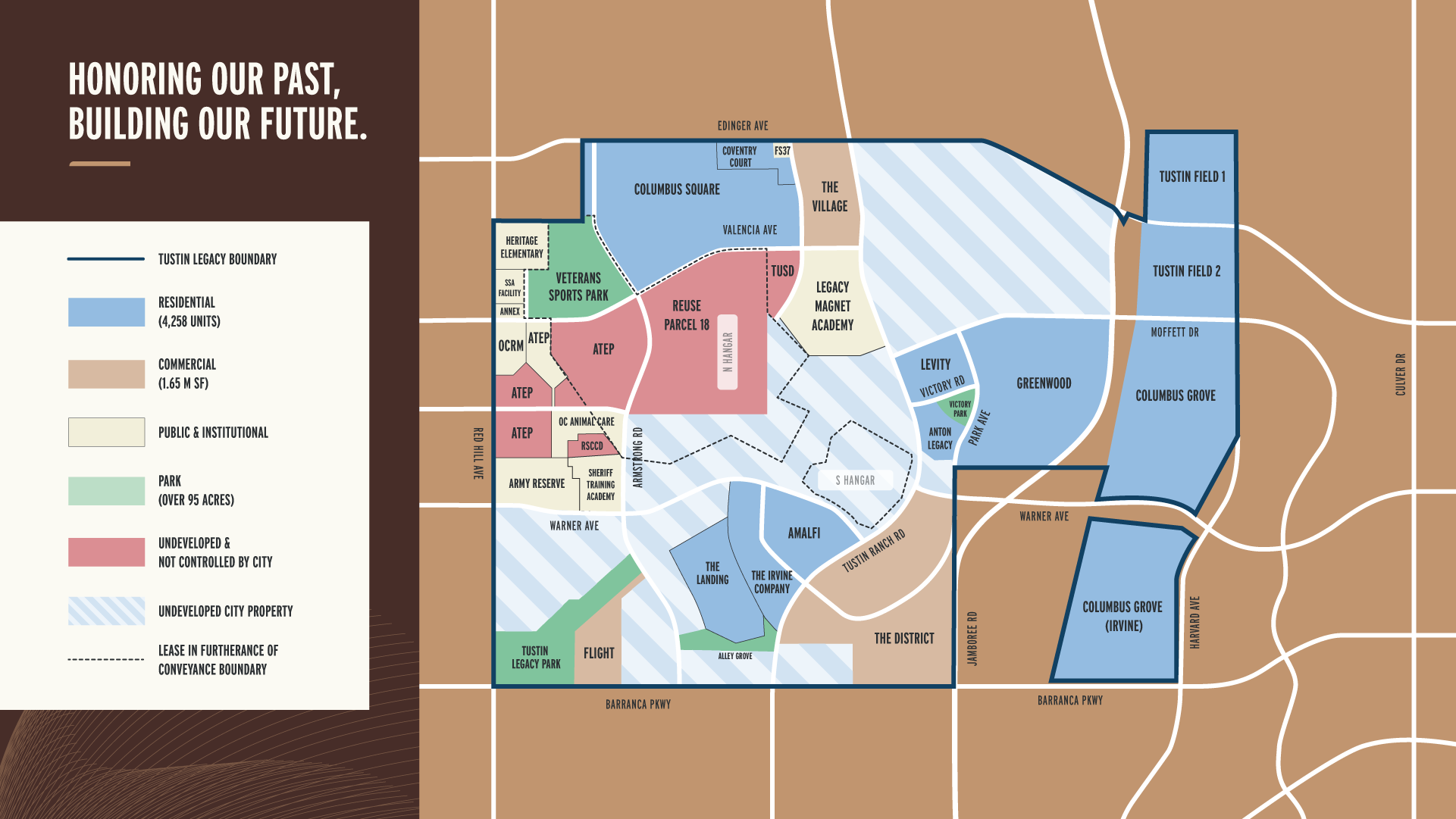
Image source: Tustin, CA
A Breakdown of the Different Neighborhoods and Housing Options
Tustin Legacy is not a monolithic development; it is a collection of distinct residential tracts that cater to different lifestyles, from first-time buyers to luxury seekers. The housing stock ranges from modern apartments to sprawling single-family homes with traditional architectural influences.
Established Communities and Early Phases
The first residents moved into Tustin Legacy in 2006 with the completion of Tustin Field I & II . These 565 units set the tone for the community, featuring a mix of townhomes and detached houses. Following this, the Villages of Columbus (including Columbus Square and Columbus Grove) added approximately 1,540 units. Columbus Square is particularly noted for its French, Georgian, and Colonial Revival architecture, offering a more traditional aesthetic compared to the sleek, modern designs found in newer phases.
Modern Rentals and High-Density Living
To accommodate the influx of young professionals and tech workers, high-density options like Anton Legacy and Cadence have become popular choices. These complexes offer resort-style amenities, including rooftop lounges and fitness centers, catering to those who prioritize proximity to The District's nightlife and dining. According to Wikipedia , the total planned residential capacity for the entire project is approximately 4,600 units.
| Neighborhood Name | Completion Year | Housing Type | Key Feature |
|---|---|---|---|
| Tustin Field I & II | 2006 | Single Family / Townhomes | The "pioneer" tract; established landscaping. |
| Columbus Square | 2013 | Single Family / Condos | Traditional architecture; large community park. |
| Greenwood | 2017 | Luxury Single Family | Mid-2010s luxury builds; private clubhouse. |
| The Landing | 2028–2029 | Mixed Density | Irvine Company's latest phase; reduced density. |
What to Expect from The Landing Development Through 2029
The most anticipated current residential project is The Landing , a 19-acre development by the Irvine Company . This phase represents a shift in strategy for the area, focusing on a "reduced density" approach to maintain a more open, community-focused feel.
While local zoning laws would have allowed for nearly 2,000 units, the Irvine Company opted to build 656 fewer units than the legal maximum. This decision was made to preserve the aesthetic quality of the neighborhood and ensure that infrastructure, such as parking and traffic flow, remains manageable. Key features of The Landing include:
- Phase 1 Completion: Expected by Summer 2028.
- Full Build-out: Targeted for Summer 2029.
- Public Amenities: A new 0.66-acre public park and a neighborhood cafe designed to serve as a social hub.
- Parking Solutions: The use of "wrap-style" structures to hide 2,000 parking spaces from street view, maintaining the neighborhood's visual appeal.
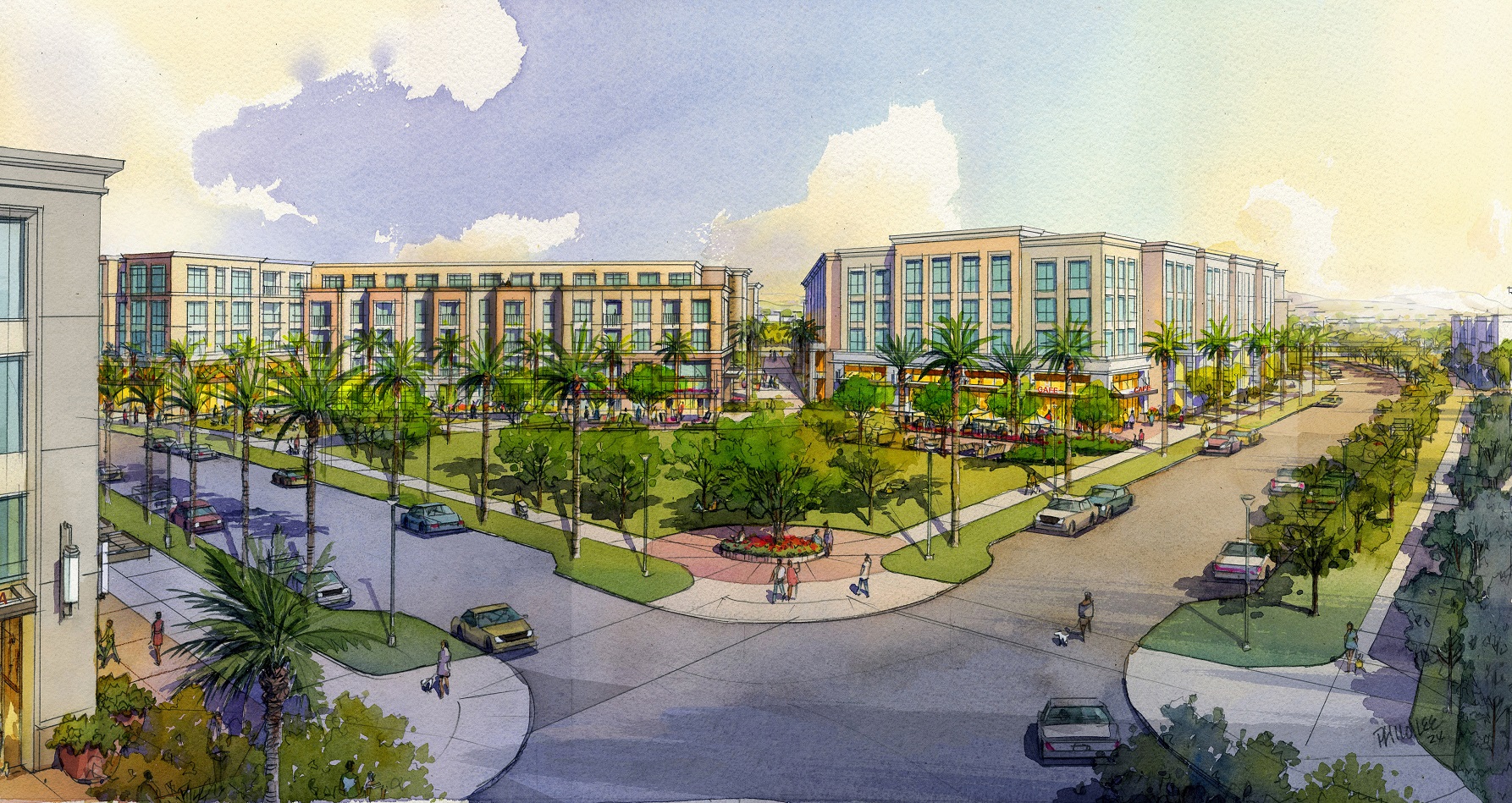
Image source: Irvine Company
Understanding the Mello-Roos Taxes and Homeowner Costs
For many prospective buyers, the primary concern when looking at Tustin Legacy is the tax structure. Because this is a master-planned community built on land that required significant infrastructure investment (roads, sewers, and schools), most properties carry Mello-Roos assessments.
Mello-Roos, or Community Facilities Districts (CFDs), are special tax districts that allow developers to fund public improvements through bonds. These bonds are repaid by the homeowners over a period typically ranging from 20 to 40 years. In Tustin Legacy, these fees can add several hundred dollars to a monthly mortgage payment, making it essential for buyers to calculate their "all-in" costs before purchasing.
Shopping and Dining at The District and The Village
The commercial heart of the community is The District at Tustin Legacy , a 1-million-square-foot lifestyle center that serves as a regional destination. It is widely considered a top choice for dining and entertainment in central Orange County.
The District at Tustin Legacy
Anchored by major retailers like Costco, Whole Foods, and Target, The District offers more than just basic shopping. It features an AMC Tustin 14 cinema and a Bowlero for recreation. However, the standout feature for food enthusiasts is The Annex . This food hall concept focuses on artisanal, local vendors rather than national chains, offering everything from gourmet ice cream to specialized ramen. You can find a full directory of current tenants at The District's official site .
The Village at Tustin Legacy
While The District handles large-scale retail, The Village at Tustin Legacy serves the daily needs of residents. This 22-acre neighborhood center features a Stater Bros. supermarket, a CVS Pharmacy, and various medical and dental offices. Its location makes it highly accessible for residents of Columbus Square and Greenwood, often within a short walk or bike ride.
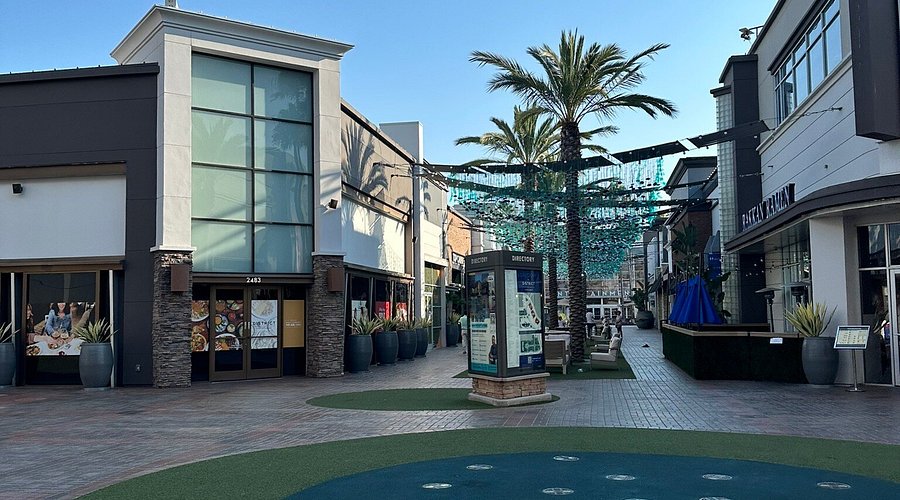
Image source: Tripadvisor
Navigating Schools and Education at Legacy Magnet Academy
Education is a major draw for families moving to Tustin Legacy. The community is served by the Tustin Unified School District (TUSD), which has implemented specialized programs to match the tech-focused nature of the area.
Legacy Magnet Academy (LMA)
Opened in the fall of 2020, Legacy Magnet Academy serves grades 6 through 12. The school follows a "TIDE" curriculum, which stands for Technology, Innovation, Design, and Entrepreneurship. This specialized focus is designed to prepare students for careers in the modern workforce, utilizing state-of-the-art labs and collaborative workspaces. Admission is typically handled through a lottery system for students living within TUSD boundaries.
The ATEP Factor
Beyond K-12 education, the 61.4-acre Advanced Technology & Education Park (ATEP) is a significant asset. Managed by the South Orange County Community College District, ATEP hosts programs from Saddleback College and Irvine Valley College. The campus focuses on high-demand workforce training, including integrated design and sustainable technology, making it a highly influential hub for regional economic development.
What Is the Vision for the Historic Blimp Hangar Core?
The "Hangar Core" remains the most complex piece of the Tustin Legacy puzzle. The city has held numerous workshops to gather community input on the adaptive reuse of the remaining South Hangar and the surrounding land. The challenge lies in the high cost of maintaining these massive wooden structures while ensuring they provide public value.
Current proposals for the Hangar Core include a mix of public park space, a "town square" for community events, and potential commercial reuse that respects the historical integrity of the site. As of 2026, the city continues to evaluate the structural needs of the South Hangar to ensure it remains a safe and iconic landmark for decades to come.
Public Facilities and Outdoor Recreation
Recreation is a cornerstone of the Tustin Legacy lifestyle. The Veterans Sports Park is a premier facility within the community, offering soccer fields, basketball courts, and a popular splash pad for children. The park also serves as a site for community events and memorials honoring the base's military history.
Additionally, the community houses the OC Animal Care shelter, a 30,000-square-foot facility that provides animal services for much of Orange County. The presence of the Orange County Sheriff’s Regional Training Academy and a U.S. Army Reserve center further cements the community's role as a hub for public service and safety.
Frequently Asked Questions About Tustin Legacy
By most accounts, Tustin Legacy is considered a very safe community. The "live-work-play" design ensures constant activity and "eyes on the street," which naturally deters crime. Furthermore, the presence of the Orange County Sheriff’s Academy within the community footprint provides a high level of law enforcement visibility.
Mello-Roos fees vary by tract but typically range from $3,000 to over $8,000 per year, depending on the size and age of the home. These fees are added to your standard property tax bill. It is important to check the specific CFD (Community Facilities District) for any home you are considering to understand the exact cost and the bond's expiration date.
Legacy Magnet Academy is a public school within the Tustin Unified School District, but it is not a traditional neighborhood school. It uses a lottery-based application process. Priority is generally given to students residing within the TUSD boundaries, but the specialized TIDE curriculum attracts applicants from across the district.
The South Hangar is being preserved as a historic landmark, with the city exploring adaptive reuse options like a community center or event space. The North Hangar was unfortunately lost to a fire in 2023, and the site is currently undergoing remediation and planning for future public use, likely as part of a larger park system.
Yes, development is ongoing. The most significant current project is The Landing by the Irvine Company, which will continue construction through 2029. Future phases of the Hangar Core and other mixed-use zones are also in the planning stages, ensuring new housing options will be available for several more years.
- Master-Planned Scale: A 1,600-acre redevelopment of a former Marine base, integrating residential, retail, and tech hubs.
- Diverse Housing: Options range from the traditional architecture of Columbus Square to the modern luxury of Greenwood and The Landing.
- Retail Hubs: Anchored by The District for major shopping and entertainment, and The Village for daily essentials.
- Specialized Education: Home to Legacy Magnet Academy (grades 6-12) and the ATEP tech-education park.
- Tax Considerations: Most homes carry Mello-Roos assessments that significantly impact the monthly cost of ownership.
- Future Growth: Development continues through 2029, with a focus on reduced density and historical preservation of the blimp hangars.
If you are considering a move to Tustin Legacy, your next step should be to review a specific property tax breakdown to ensure the Mello-Roos assessments fit within your long-term budget.