Home
What Is the Estonian Language and How Does It Actually Work?
Estonian ( eesti keel ) is a Finnic language within the Uralic family, spoken by approximately 1.1 to 1.2 million people. It is not related to Russian or Latvian, but shares deep roots with Finnish. Notable for its 14 noun cases, lack of grammatical gender, and absence of a future tense, it is widely regarded as one of the most unique linguistic systems in Europe. While English proficiency is high in urban centers like Tallinn, the language remains the cornerstone of Estonian cultural identity and digital innovation.
Where Does the Estonian Language Come From?
To understand the Estonian language, one must first look beyond the Indo-European family tree that dominates most of Europe. Unlike English, French, or German, Estonian belongs to the Uralic (Finno-Ugric) language family. This means it shares no common ancestry with its Baltic neighbor Latvia or the Slavic influence of Russia. Instead, its closest relatives are Finnish and, more distantly, Hungarian.
According to Wikipedia's linguistic records , the language has been spoken in the region for millennia, evolving from Proto-Finnic. Today, it serves as the mother tongue for roughly 922,000 residents within Estonia and an additional 160,000 members of the global diaspora. This relatively small speaker base has fostered a fierce sense of linguistic preservation, especially during periods of foreign occupation.
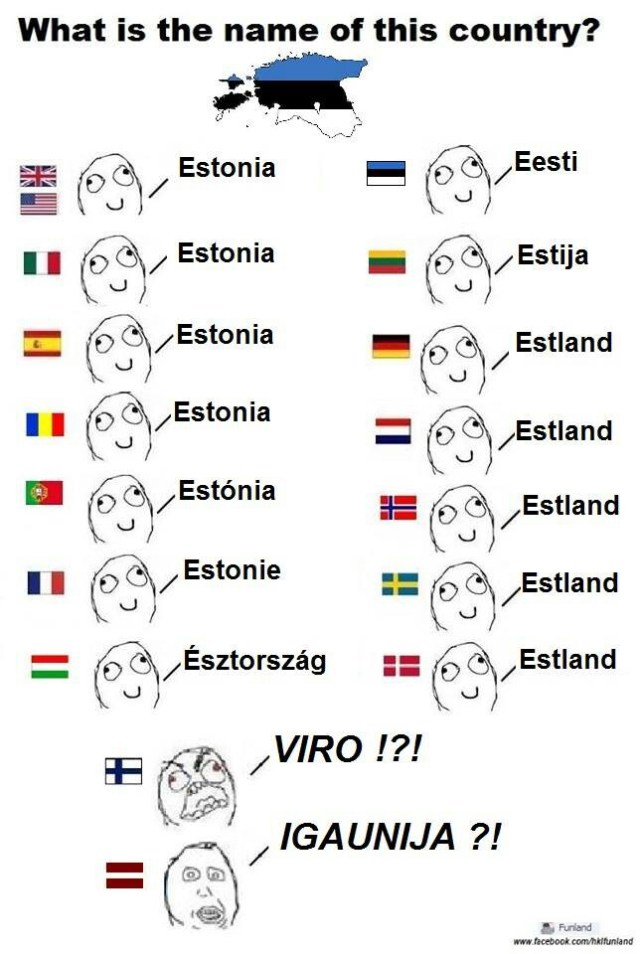
Image source: The Language Closet
The history of the written word in Estonia dates back to the 13th century, with the first mentions appearing in the Livonian Chronicle of Henry . However, the language remained largely oral for the peasantry while the ruling classes spoke Low German or Latin. This historical dynamic led to a significant influx of Germanic loanwords, which now account for roughly 25% of the modern Estonian vocabulary, despite the vastly different grammatical foundations.
Is Estonian Really That Similar to Finnish?
Travelers often assume that because Estonian and Finnish are closely related, they are mutually intelligible. While a Finn and an Estonian can often grasp the general topic of a conversation, the relationship is more akin to Spanish and Italian—similar enough to be familiar, but different enough to cause confusion. Linguists note that while Finnish has remained more strictly agglutinative (adding suffixes to a stable root), Estonian has moved toward being a fusional language, where the internal structure of the word changes to indicate grammar.
Both languages share basic vocabulary for nature, body parts, and numbers. For example, "hand" is käsi in both.
Beware of words like hallitus . In Finnish, it means "government," but in Estonian, it means "mold."
Estonian has lost many of the final vowels found in Finnish, making it sound "sharper" or more clipped to the ear.
The divergence between the two is also historical. While Finland was under Swedish influence for centuries, Estonia was dominated by the Teutonic Knights and Baltic Germans. This created a distinct "vibe" in the language; Estonian feels slightly more influenced by the rhythmic patterns of German, whereas Finnish retains a more rhythmic, vowel-heavy flow characteristic of its ancient roots.
Why Estonian Grammar Is Famous for Being Difficult
If you ask a language learner about Estonian, the first thing they will likely mention is the 14 noun cases . For speakers of English, which has largely abandoned cases, this can seem like a daunting mountain to climb. However, these cases are not just arbitrary rules; they serve a highly functional purpose by replacing prepositions like "in," "on," "at," or "from."
The 14 Noun Cases
Instead of saying "in the house," an Estonian adds the suffix -s to the word for house ( maja ), resulting in majas . This system allows for incredibly concise sentences. The cases are divided into three main groups: grammatical, interior local, and exterior local. While the sheer number is high, the logic is consistent once the learner understands the spatial relationships they represent.
| Feature | Estonian | Finnish | Russian |
|---|---|---|---|
| Language Family | Uralic | Uralic | Indo-European |
| Grammatical Gender | None | None | 3 (M/F/N) |
| Noun Cases | 14 | 15 | 6 |
| Future Tense | None | None | Yes |
| Script | Latin | Latin | Cyrillic |
The "No Sex, No Future" Rule
One of the most famous quirks of Estonian is that it is a language with "no sex and no future." This refers to two specific grammatical traits:
- No Gender: There is no "he" or "she." The word tema is used for everyone, regardless of gender. This makes Estonian one of the most naturally gender-neutral languages in the world.
- No Future Tense: Estonians do not have a specific verb form for the future. Instead, they use the present tense combined with time adverbs. To say "I will go tomorrow," an Estonian says Ma lähen homme (literally: "I go tomorrow").
According to the e-Residency blog , this lack of a future tense is often joked about as a reflection of the Estonian temperament—focused on the present and the practical.
How the Three Degrees of Vowel Length Change Everything
Estonian is a highly phonetic language, meaning it is almost always written exactly as it sounds. However, it possesses a phonetic feature that is exceptionally rare in world languages: three distinct degrees of phonemic length for both vowels and consonants. This means the duration of a sound can completely change the meaning of a word.
- Short (Degree 1)
- Sada – means "hundred." The 'a' sounds are quick.
- Long (Degree 2)
- Saada – means "to send" or "to get." The 'aa' is held longer.
- Extra-Long (Degree 3)
- Saada! – the imperative "Send!" The 'aa' is held even longer and often involves a slight pitch drop.
For non-native speakers, distinguishing between the second and third degrees is one of the most challenging aspects of the language. It requires a keen ear for rhythm and timing. This three-tier system contributes to the "musical" quality of Estonian, which many listeners compare to the fictional Elvish languages created by J.R.R. Tolkien (who was, in fact, inspired by Finnic languages).
The Man Who Invented Thousands of Words from Thin Air
Most languages evolve slowly over centuries, but Estonian underwent a deliberate "Language Renewal" ( keeleuuendus ) in the early 20th century. A linguist named Johannes Aavik felt that Estonian was too clunky and too influenced by German. He embarked on a mission to "beautify" the language by intentionally creating new words from scratch.
Aavik didn't just look for old roots; he combined sounds that he felt sounded "modern" or "elegant." Words like male (chess), veenma (to convince), and mõrv (murder) were essentially invented by Aavik and successfully integrated into the common lexicon. This artificial modernization is a significant reason why Estonian feels so well-suited for the digital age; it was designed to be flexible and efficient.
Can You Live in Estonia Speaking Only English?
For expats and digital nomads, the question of language necessity is paramount. As of 2026, Estonia ranks among the top European nations for English proficiency. Data from AtoZ World Culture suggests that approximately 50% of the population speaks English, with that number rising significantly among those under the age of 40 and in the capital city, Tallinn.
In the tech sector and tourism industry, English is often the primary language of communication. However, there is a "glass ceiling" for those who do not learn the local tongue. For professional roles in education, healthcare, or public service, a C1 level of Estonian is often a legal requirement. As noted by Study in Estonia , reaching this level is a significant achievement that opens doors to deep social integration and higher-tier career opportunities.
Understanding the Difference Between Northern and Southern Dialects
While the standard Estonian taught in schools is based on the Northern dialect (centered around Tallinn), the southern part of the country tells a different linguistic story. The South Estonian dialects, specifically Võro and Seto, are so distinct that many linguists classify them as separate languages rather than mere dialects.
Historically, South Estonian had its own literary tradition, including a New Testament published in 1686—decades before a full translation was available in the Northern dialect. Today, these languages are experiencing a revival. The Seto people, in particular, maintain a unique cultural identity that blends Finnic traditions with Orthodox Christianity, and their polyphonic singing ( leelo ) is recognized by UNESCO.
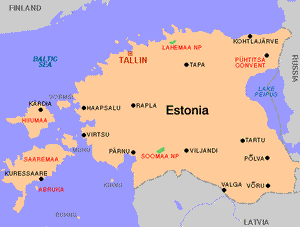
Image source: MustGo.com
How the Language Reflects an Ancient Animist Worldview
One of the most beautiful aspects of Estonian is how it preserves an ancient, nature-centric worldview. The language often treats natural elements as active participants in life. A prime example is the idiom vihma käes , which literally translates to "in the hand of the rain" rather than just "in the rain."
This "hand" metaphor extends to many natural phenomena, suggesting a time when the ancestors of modern Estonians viewed the forest, the sea, and the weather as entities with their own agency. This animist legacy makes the language feel deeply connected to the Estonian landscape, which remains over 50% forest to this day.
How to Start Learning Estonian Without Losing Your Mind
If you are ready to tackle eesti keel , experts suggest moving away from traditional rote memorization of grammar tables. Because the 14 cases are so complex, the most effective strategy is to learn in "chunks."
- Focus on Phrases: Instead of learning the word for "city" and then the "in" case, simply learn Ma elan Tallinnas (I live in Tallinn). You will internalize the grammar naturally through usage.
- Use Digital Resources: The Institute of the Estonian Language (EKI) provides top-tier online dictionaries and tools that are essential for any learner.
- Retrieval Practice: Don't just read; try to produce the language. Even small interactions at a grocery store help build the neural pathways needed for the three-degree vowel system.
Essential Phrases for Your First Trip to Tallinn
Even a few words can go a long way in showing respect for the local culture. Here are the basics every visitor should know:
Hello. (Used at any time of day).
Thank you. (Pronounced eye-tah).
Cheers / To your health.
Please / You're welcome.
And for a bit of fun, try to pronounce the famous palindrome: KUULILENNUTEETUNNELILUUK . It means "the hatch a bullet flies out of when exiting a tunnel." While you likely won't need to use it, it perfectly demonstrates the language's love for long, compound words.
Frequently Asked Questions
Is Estonian harder to learn than Finnish?
Most learners find Estonian slightly more difficult initially due to its transition into a fusional language. While Finnish has more cases (15 vs 14), its rules are generally more regular. Estonian involves more internal word changes (stem changes) that must be memorized, making the early stages of learning quite steep compared to the more predictable Finnish structure.
Is Estonian a Slavic language?
No, Estonian is not a Slavic language. It belongs to the Uralic family, making it unrelated to Russian, Polish, or Czech. While there are some Russian loanwords due to historical proximity, the core grammar, syntax, and vocabulary are entirely different. An Estonian speaker cannot understand Russian without specifically studying it, and vice versa.
Why does Estonian sound like Elvish?
J.R.R. Tolkien, the author of The Lord of the Rings , was a philologist who was deeply enamored with the Finnic languages. He used the phonology and structure of Finnish (and by extension, its close relative Estonian) as the primary inspiration for Quenya, one of his Elvish languages. The abundance of vowels and the melodic flow are the key reasons for this resemblance.
How many people speak Estonian worldwide?
Current estimates place the number of speakers between 1.1 and 1.2 million. The vast majority (around 922,000) live in Estonia, while significant diaspora communities exist in Finland, Sweden, the United States, and Canada. Despite the small number, the language is highly resilient and is one of the official languages of the European Union.
What is the hardest part of Estonian grammar?
For most, the hardest part is the combination of the 14 noun cases and the "three degrees of length." Unlike many languages where you just learn a word, in Estonian, you must learn the genitive and partitive forms of every noun to know how to decline it. This requires a significant amount of initial memorization before you can speak fluently.
Final Thoughts on the Estonian Language
Estonian is a remarkable example of linguistic resilience and innovation. As you explore this unique tongue, keep these key takeaways in mind:
- Uralic Roots: It is a Finnic language, not Slavic or Indo-European.
- Grammatical Quirks: It features 14 cases but lacks gender and a future tense.
- Phonetic Depth: The three-tier vowel length system is a rare and beautiful feature.
- Modern Evolution: Much of the modern vocabulary was intentionally designed for beauty and efficiency.
- English Accessibility: While English is common in cities, Estonian is the key to deep cultural connection.
- Regional Diversity: Southern dialects like Võro offer a glimpse into a different linguistic history.
Whether you are visiting for a weekend or planning a move, learning even a few phrases of eesti keel will significantly enhance your experience in this digital-forward, forest-loving nation. Start by practicing your "Tere" and "Aitäh" today to build a bridge to the Estonian heart.