Home
What Is the Real Difference Between a Yacht and a Sailboat?
The primary difference between a yacht and a sailboat lies in intent and luxury rather than just propulsion. A sailboat is a vessel powered primarily by wind, while a "yacht" is a classification of luxury vessel (either motor or sail) typically exceeding 40 feet (12 meters) in length. While all yachts are boats, not all boats are yachts; a yacht is defined by its permanent living quarters, high-end amenities, and often, the requirement for a professional crew.
How to Define a Yacht in the Modern Era
In the maritime world, the distinction between a boat and a yacht often feels subjective, yet it follows a specific hierarchical logic. According to AceBoater , the industry generally accepts that "every yacht is a boat, but not every boat is a yacht." This transition is less about a single feature and more about the shift from a utility-focused vessel to a lifestyle-focused one.
A standard boat is typically designed for a specific activity: fishing, water skiing, or short day trips. These vessels prioritize functional space for the task at hand. In contrast, a yacht is designed for comfort, extended stays, and aesthetic prestige. The term "yacht" itself originates from the Dutch word jacht , meaning "hunt" or "chase," originally referring to fast naval vessels used to pursue pirates. Today, that speed has been replaced by sophistication.
Modern classification relies on three pillars: size, amenities, and operation. If a vessel is used primarily for recreation and possesses a high standard of finish, it enters the yacht category. However, the line remains blurry for vessels in the 30-to-40-foot range, where a boat might be called a "cabin cruiser" by its owner but a "yacht" by its manufacturer to justify a higher price point.
How Size and Length Define the Transition to Yacht Status
Size is the most visible differentiator, though the exact footage required to earn the "yacht" label varies by region and context. The industry generally follows a spectrum of consensus regarding length overall (LOA):
- 8–10 meters (26–33 ft): This is the technical entry point. In many European markets, a 30-foot vessel is frequently referred to as a yacht, especially if it includes a galley and a head.
- 12 meters (40 ft): This is the most common recreational threshold. Below this length, vessels are often categorized as boats or cruisers. Above 40 feet, the systems become complex enough to warrant yacht status.
- 14 meters (46 ft): Many brokers and builders use this as a hard transition point. At this size, the vessel typically requires more sophisticated docking maneuvers and often features multiple staterooms.
It is important to note that as size increases, the terminology shifts again. Once a vessel exceeds 24 meters (79 feet), it is often referred to as a "Large Yacht" or "Superyacht." If it crosses the 60-meter (197-foot) mark, it enters the "Megayacht" category. These distinctions are not just for show; they correspond to significant changes in how the vessel is built and regulated.
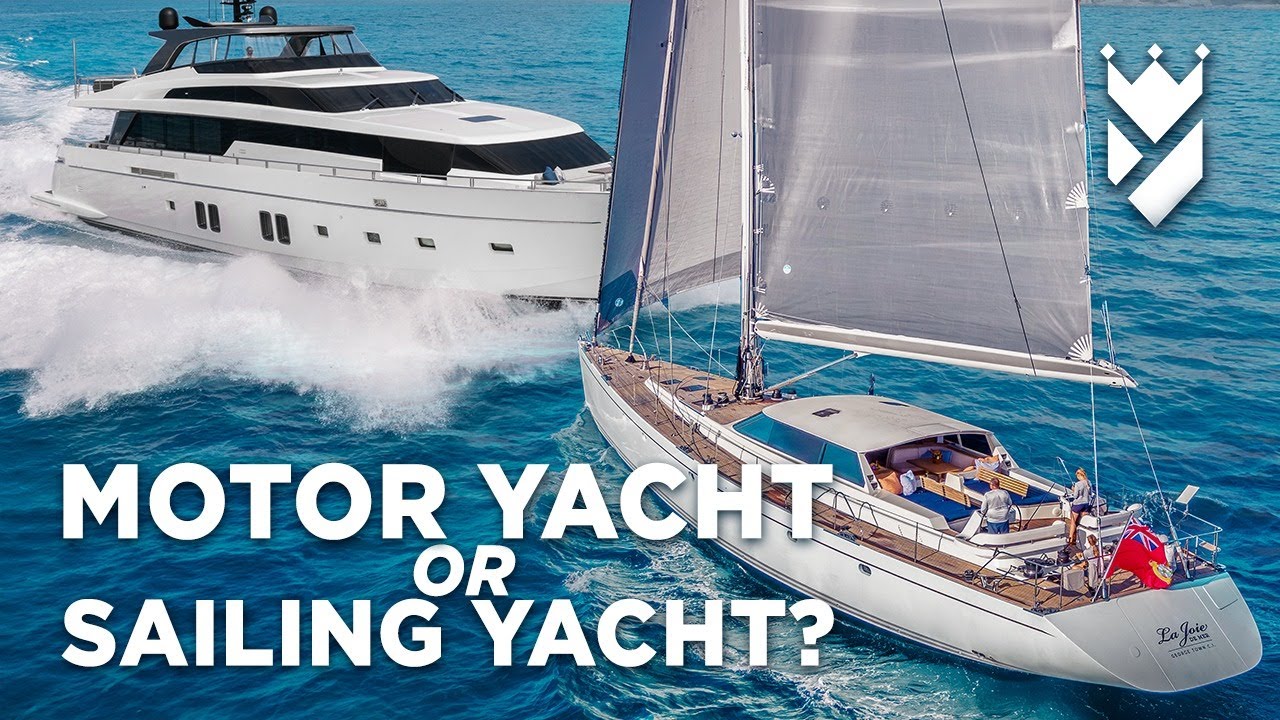
Image source: YouTube
Why the 24-Meter Rule Is the Most Important Number in Yachting
While 40 feet is a social benchmark, 24 meters (79 feet) is a critical regulatory threshold. This is known in maritime law as the "24-meter rule," and it represents a significant advancement in the complexity of vessel ownership. According to international maritime regulations, vessels at or above 24 meters are subject to much stricter load line requirements and safety standards.
At this length, the vessel is no longer treated as a simple pleasure craft. It must comply with the "Large Yacht Code" (such as LY3), which dictates everything from fire suppression systems to the structural integrity of the hull. Because these regulations add substantial cost to construction and maintenance, many yacht designers intentionally build vessels to a length of exactly 23.9 meters . This allows the owner to enjoy nearly the same space as a 24-meter vessel while remaining under the "Small Vessel" regulatory umbrella.
Furthermore, the 24-meter mark often triggers the requirement for a professionally licensed captain and crew, even for private use in certain jurisdictions. This regulatory cliff is why you will see a massive number of yachts marketed at just under 80 feet; it is a strategic choice to maximize luxury while minimizing bureaucratic oversight.
The 23.9 Meter Strategy
In the yachting industry, 23.9 meters is a "magic number." By keeping the hull just under the 24-meter threshold, builders avoid the stringent International Load Line Convention requirements. This can save an owner hundreds of thousands of dollars in initial construction and annual compliance costs while still providing a vessel that feels like a superyacht.
Can a Sailboat Be a Yacht and Does Propulsion Matter?
A common misconception is that yachts must be powered by large diesel engines. In reality, propulsion is not a defining factor for yacht status. The category of Sailing Yachts represents some of the most sophisticated vessels on the water. As noted by Wikipedia , a sailing yacht is a vessel that uses wind as its primary means of propulsion but maintains the luxury and size standards of the yacht class.
Sailing Boat vs. Sailing Yacht
The difference between a "sailing boat" and a "sailing yacht" usually comes down to the presence of a cabin and the vessel's range. A 14-foot Laser or a 22-foot Catalina is a sailboat; they are designed for day use or racing and lack the amenities for long-term living. A 45-foot Oyster or Hallberg-Rassy, however, is a sailing yacht. It features multiple cabins, a full kitchen (galley), and the ability to cross oceans in comfort.
Motor Yachts
Motor yachts are the most common vessels associated with the term. They rely entirely on engines and are often designed with more interior volume than sailing yachts because they do not need to accommodate masts, rigging, or the heeling (tilting) motion caused by wind. While sailing yachts appeal to those who enjoy the process of navigation, motor yachts are often chosen by those who prioritize destination-based luxury and speed.
How to Tell the Difference Between Luxury Amenities and Basic Utility
The interior of a vessel is the clearest indicator of its status. A boat is functional; a yacht is residential. To be considered a yacht, a vessel typically must have permanent living quarters. This includes "staterooms" (bedrooms), "heads" (bathrooms with plumbing), and a "galley" (kitchen). However, modern yachts go far beyond these basics.
Technical Hardware Redundancy: One of the most overlooked differences is the level of system redundancy. A standard boat might have one bilge pump and a single battery bank. A yacht is defined by its "fail-safe" systems. According to industry standards, a true yacht will often feature:
- Watermakers: Desalination systems that allow the vessel to stay at sea indefinitely by converting saltwater to freshwater.
- Gyro-Stabilizers: Advanced hardware (like Seakeeper) that uses spinning flywheels to eliminate up to 95% of boat roll, ensuring comfort even in rough seas.
- Dual Generators: To ensure that air conditioning, refrigeration, and navigation systems never lose power.
- Satellite Communication: Domes that provide high-speed internet and global positioning far beyond cellular range.
When Does a Boat Become a Business That Requires a Professional Crew?
As a vessel grows in size and complexity, it eventually reaches a point where it can no longer be safely operated by a single owner-operator. This "Crew Threshold" typically occurs between 60 and 70 feet . At this stage, the mechanical systems (engines, hydraulics, electrical grids) require a dedicated engineer, and the sheer physical size of the vessel makes docking and cleaning a full-time job.
In the United States, the Coast Guard (USCG) introduces a shift in classification at 65 feet . Vessels at or above this length are often technically classified as "ships" in specific regulatory contexts, requiring different safety equipment and operator licensing. For many owners, hiring a professional captain is not just a luxury but a requirement for insurance coverage. Insuring a 70-foot yacht without a full-time professional on the payroll is exceptionally difficult and costly.
Why Some Small Racing Boats Are Technically Called Yachts
There is a fascinating linguistic quirk in the maritime world: the racing exception. You may hear a sailor refer to their 12-foot dinghy as a "yacht" during a sanctioned regatta. This is because, in the context of competitive sailing, any vessel participating in a race governed by a "Yacht Club" is technically a yacht for the duration of the event.
This historical carryover explains why organizations like the New York Yacht Club or the Royal Yacht Squadron include members who may only own small, one-design racing boats. In this specific social and competitive niche, "yachting" refers to the sport of racing under sail, regardless of the vessel's size or luxury level. However, outside of the racecourse, that same 12-foot boat would never be called a yacht in a commercial or social setting.
What Does It Actually Cost to Maintain a Yacht vs a Sailboat?
The financial commitment of a yacht is significantly higher than that of a sailboat of similar length. This is primarily due to the complexity of the systems and the fuel consumption of large engines. A common rule of thumb in the industry is that annual maintenance will cost approximately 10% of the vessel's purchase price .
Initial upgrades and personalization. For a $500,000 sailing yacht, expect $50,000 in docking, insurance, and minor tweaks.
Major engine services, sail replacements, or hull painting. Motor yachts may see higher costs here due to specialized engine parts.
According to financial data, owners who overextend often face a 24–48 month window to settle debts or sell the vessel if maintenance costs outpace their budget.
Fuel is the biggest variable. A sailing yacht can travel thousands of miles for the cost of a few gallons of diesel used for the generator and port maneuvers. A motor yacht of the same size might burn 30 to 100 gallons of fuel per hour at cruising speed. This makes the "cost per mile" for a motor yacht exponentially higher than that of a sailboat.
Yacht vs Sailboat vs Boat Comparison Matrix
| Vessel Type | Typical Size | Primary Purpose | Crew Needs | Key Hardware |
|---|---|---|---|---|
| Utility Boat | 15–30 ft | Fishing / Sports | Owner-Operated | Outboard Engines |
| Sailboat | 20–35 ft | Day Sailing | Owner-Operated | Sails / Tiller |
| Sailing Yacht | 40–80 ft | Cruising / Living | Optional Crew | Watermaker / Galley |
| Motor Yacht | 40–79 ft | Luxury Travel | Often Required | Stabilizers / Genset |
| Superyacht | 80+ ft | Lifestyle / Status | Full Professional | Helipads / Tenders |
Key Takeaways
- Size Matters: While 40 feet is the social standard for a yacht, 24 meters (79 feet) is the critical regulatory threshold for international law.
- Luxury Over Utility: A yacht is defined by its amenities (staterooms, galleys) and lifestyle focus, whereas a boat is defined by its activity (fishing, towing).
- Propulsion is Secondary: A sailboat can absolutely be a yacht if it meets the size and luxury criteria; these are classified as "Sailing Yachts."
- System Redundancy: True yachts feature advanced hardware like gyro-stabilizers and watermakers that are rarely found on standard boats.
- The Crew Threshold: Once a vessel exceeds 60–70 feet, professional crew members are typically required for safe operation and insurance compliance.
- Social Etiquette: In casual conversation, calling your vessel a "boat" is often seen as more modest, while "yacht" is used for technical, legal, or insurance purposes.
Before purchasing your next vessel, evaluate whether your primary goal is the thrill of the activity or the comfort of the destination to determine if a boat or a yacht fits your needs.
Frequently Asked Questions
Technically, yes, in many maritime contexts a 30-foot sailboat with a cabin is considered a "sailing yacht." However, in the modern U.S. market, most enthusiasts would refer to it as a "sloop" or a "cabin cruiser" until it reaches the 40-foot mark. The label often depends on the level of luxury and whether the boat is designed for overnight stays.
For private use in the U.S., you generally do not need a special federal license to operate a yacht, though state-level boater safety cards are often required. However, if the vessel is over a certain tonnage or if you intend to carry paying passengers (chartering), you must obtain a USCG Captain’s License. International waters often require an ICC (International Certificate of Competence).
A "Maxi Yacht" is a specific term used in the racing world to describe exceptionally large racing sailboats. According to racing standards, a Maxi is typically a vessel over 21 meters (69 feet) in length. These are high-performance machines built for speed and are often among the most technologically advanced sailing vessels in existence.
Yachts are more expensive because of their complex internal systems. A motor yacht requires massive engines, heavy fuel tanks, and sophisticated stabilization hardware. Even a luxury sailing yacht costs more than a basic sailboat due to the high-end finishes, redundant electrical systems, and the advanced materials (like carbon fiber) used to maintain performance despite the added weight of luxury amenities.
Yes, there is a specific and highly popular category known as "Sportfishing Yachts." These vessels combine the luxury of a motor yacht (staterooms, air conditioning, high-end galleys) with the functional requirements of offshore fishing (tuna towers, bait wells, and reinforced decks). They are often among the fastest and most rugged yachts on the water.