Home
How Much Sodium Is in Charque and Carne Seca per 100g?
*Traditional charque requires a 24-hour soak to reach edible sodium levels. Snack versions are ready-to-eat but contain high levels of MSG and preservatives.
Navigating the nutritional landscape of dried meats requires a clear understanding of regional terminology. While "carne seca" literally translates to "dried meat," the sodium profile of a 100g serving varies wildly depending on whether you are consuming a modern snack or a traditional culinary ingredient. For those monitoring their salt intake for heart health or kidney function, mistaking one for the other can lead to consuming nearly three times the daily recommended limit of sodium in a single sitting.
In this analysis, we break down the specific milligram counts for popular brands, explain the chemical difference between salt and sodium, and provide a verified workflow for reducing the mineral load in traditional Brazilian-style meats. Whether you are using these proteins for a keto diet or a traditional Feijoada, understanding the "per 100g" data is essential for maintaining a balanced nutritional profile.
Understanding the Massive Difference Between Snack Jerky and Traditional Charque
The term "Carne Seca" is often used interchangeably for two very different products. The first is the American-style snack jerky, which is marinated, sliced thin, and dried until it is shelf-stable but still chewable. The second is traditional South American Charque , a heavily salted, sun-dried slab of beef used as a primary ingredient in stews and rice dishes. According to technical data from the FAO (Food and Agriculture Organization) , traditional charque processing involves a "salt blanket" that results in a final salt content of 12% to 15%.
This difference in processing creates a massive variance in sodium levels. A snack bag of carne seca is designed to be eaten by the handful, whereas traditional charque is a concentrated salt source that must be treated before consumption. Research indicates a variance of over 400% in sodium density between these two categories. You cannot use the nutrition label of a snack bag to estimate the salt in a traditional culinary ingredient, as the latter is significantly more concentrated.
Snack-Style Carne Seca
- Ready to eat from the bag
- Sodium: 1,500mg - 2,100mg per 100g
- Contains MSG and flavorings
- Lower salt, higher moisture
Traditional Culinary Charque
- Requires 12-24 hour soaking
- Sodium: 4,800mg - 6,000mg per 100g (Raw)
- Preserved via "Salt Blanket" method
- Highest sodium density available
How Much Sodium Is Actually in 100g of Carne Seca?
When looking at the raw data, the numbers are staggering compared to fresh beef, which contains only about 50mg to 70mg of sodium per 100g. For dried meats, the removal of water concentrates all nutrients, including minerals. According to NutritionValue's analysis of Vigil's Beef Jerky , a standard snack-style carne seca contains approximately 1,535mg of sodium per 100g. However, other variants of the same brand have been recorded as high as 2,142mg per 100g, likely due to different flavor profiles like Green Chile or extra seasoning.
For traditional charque, the numbers move into a different tier. Because the meat is cured in physical salt, the raw product is essentially a salt delivery system. If a product is 15% salt by weight, that means 100g of meat contains 15g of salt. Using the standard conversion where sodium is roughly 40% of the weight of salt, 100g of raw charque contains approximately 6,000mg of sodium. This is nearly three times the American Heart Association's recommended daily limit of 2,300mg.
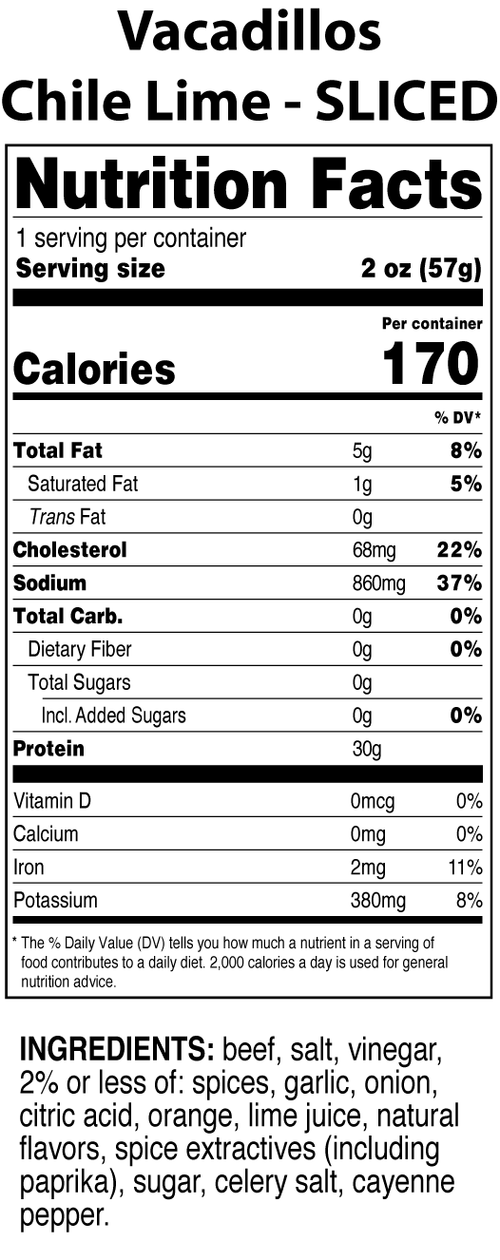
Image source: Vacadillos
Why Traditional Charque Contains So Much More Salt Than Jerky
The disparity in sodium comes down to the preservation method. Jerky is a modern convenience food that relies on a combination of marination, controlled dehydration, and often chemical preservatives like sodium nitrite to prevent spoilage. The salt is used primarily for flavor and to assist in lowering water activity.
Traditional charque, however, was developed as a way to preserve meat in tropical climates without refrigeration. The "Salt Blanket" method involves stacking layers of meat between thick layers of coarse salt. The salt draws out moisture through osmosis, replacing the water in the muscle fibers with a high concentration of minerals. This creates an environment where bacteria cannot survive. As noted by the FAO , this process results in a product that can last for months at room temperature, but it leaves the meat saturated with sodium.
The Sodium Hierarchy of Dried Meats
Not all dried meats are created equal. If you are looking for a lower-sodium option while still enjoying the texture of dried beef, it is helpful to understand the hierarchy of salt concentration:
- Carne de Sol: This is the "lightest" version. It is salted lightly and dried for a short period, usually overnight. It has the lowest sodium but the shortest shelf life.
- Beef Jerky / Snack Carne Seca: These are marinated and dried. They rank among the top choices for high-protein snacks but still contain significant sodium (approx. 1,500mg - 2,000mg).
- Traditional Charque / Carne Seca: These are the heavy hitters. They are fully cured in salt and contain the highest levels of sodium (4,000mg+).
Choosing the right product depends on your intended use. For a quick hike, a snack-style jerky is appropriate. For a traditional Brazilian stew, charque is required, but it must be prepared correctly to avoid salt toxicity.
How the Desalting Process Changes the Nutritional Profile
One of the most common misconceptions is that the sodium listed on a raw charque package is what you actually consume. In culinary practice, traditional carne seca is almost never eaten raw. The desalting process is a mandatory multi-step workflow that significantly alters the nutritional profile of the meat before it reaches your plate.
The Essential Desalting Workflow
Rinse the raw meat under cold running water to remove the surface crust of coarse salt. This removes approximately 10-15% of the total sodium immediately.
Submerge the meat in a large volume of cold water. The ratio should be at least 4 parts water to 1 part meat. Keep this in the refrigerator to prevent bacterial growth.
Change the water every 4 to 6 hours. Each change facilitates further osmosis, drawing salt out of the deep muscle fibers. A 24-hour soak with 4 water changes can reduce sodium by up to 60%.
Boil the meat in fresh water for 20-30 minutes. Some chefs add a peeled potato to the water, which is a traditional (though scientifically debated) method to "absorb" excess salt. The boiling process leaches out the final remaining surface salts.
After this process, 100g of prepared charque typically contains between 1,200mg and 1,800mg of sodium. While still high, it is a significant reduction from the 6,000mg found in the raw state. This makes the meat a top-tier protein source for traditional dishes without being immediately dangerous to most healthy adults.
Hidden Sources of Sodium in Commercial Carne Seca Snacks
When purchasing ready-to-eat snacks, the sodium count isn't just coming from sea salt. Manufacturers often use several additives that increase the total sodium load without being immediately obvious to the consumer. According to ingredient lists from brands like Vigil's , two common culprits are Monosodium Glutamate (MSG) and Soy Lecithin.
MSG is a flavor enhancer that provides the "umami" taste associated with savory meats. While it contains less sodium than table salt, it still contributes to the total milligram count listed on the label. Soy lecithin is often used as an emulsifier or a releasing agent to prevent the meat strips from sticking together in the package. For individuals with extreme sodium sensitivity, these "hidden" sources can cause unexpected spikes in blood pressure, even if the "salt" content seems manageable.
Is the High Sodium in Charque Dangerous for Your Kidneys?
The combination of extreme protein density and high sodium creates a unique challenge for the human body, specifically the kidneys. Dried beef is one of the most protein-dense foods available, with some brands like Carnes Gusi reporting up to 67g of protein per 100g.
The "Renal Solute Load" refers to the amount of waste products the kidneys must filter. Both urea (from protein metabolism) and sodium require significant amounts of water to be excreted. If you consume 100g of carne seca without adequate hydration, your kidneys must work exceptionally hard to process the load. For those with pre-existing chronic kidney disease (CKD), this food ranks among the most high-risk options and should generally be avoided or strictly limited to small, desalted portions.
Comparing Popular Carne Seca Brands by Sodium Content
To help you make an informed choice, we have compiled data from various nutritional databases. Note the significant discrepancies in protein and sodium, which highlight the importance of reading individual labels rather than relying on generic "dried beef" entries.
| Brand / Source | Sodium (mg) per 100g | Protein (g) per 100g | Style |
|---|---|---|---|
| Carnes Gusi | 984mg | 67.0g | Snack / Machacado |
| Vigil's (Original) | 1,535mg | 57.1g | Snack Jerky |
| Vigil's (Green Chile) | 2,142mg | 67.9g | Snack Jerky |
| Tio Taco | 4,750mg* | 3.5g* (Suspect) | Traditional / Dried |
| Raw Brazilian Charque | ~5,500mg | ~50.0g | Culinary Ingredient |
*Data for Tio Taco from EatThisMuch shows a very high sodium count but an unusually low protein count. This likely reflects a specific recipe or a data entry error in the database, as dried beef is fundamentally high in protein.
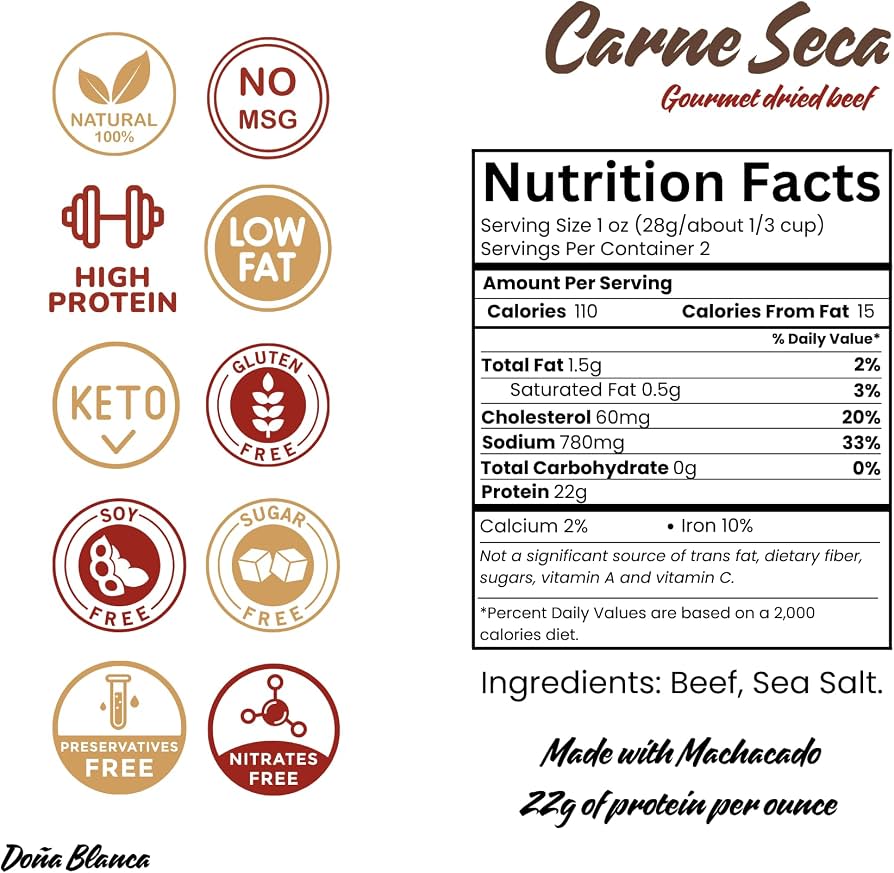
Image source: Amazon.com
How to Fit Carne Seca into a Keto or Low-Sodium Diet
Despite the high salt content, carne seca is a popular choice for specific dietary regimens. Here is how to manage the sodium while reaping the benefits of the high protein and low carb counts.
Strategies for the Ketogenic Diet
Keto followers often struggle to find portable, zero-carb snacks. Carne seca typically contains between 0g and 7g of carbs per 100g, making it a top-tier choice for staying in ketosis. However, the high sodium can cause significant water retention, which may mask fat loss on the scale. To mitigate this, ensure you are drinking at least 3-4 liters of water daily when consuming dried meats.
Strategies for a Low-Sodium Diet
If you are on a medically restricted low-sodium diet, you don't necessarily have to eliminate charque entirely, but you must change how you use it. Instead of eating it as a main protein, treat it as a seasoning . A small, thoroughly desalted portion can provide intense flavor to a large pot of beans or vegetables, distributing the sodium across multiple servings. This allows you to enjoy the traditional flavor without exceeding your daily limits.
Final Thoughts on Managing Sodium in Dried Beef
Understanding the sodium content of charque and carne seca is vital for balancing traditional flavors with modern health requirements. Here are the key takeaways to remember:
- Identify the product type: Snack jerky contains roughly 2,000mg of sodium per 100g, while raw culinary charque can exceed 5,000mg.
- Mandatory desalting: Never cook traditional charque straight from the package; a 24-hour soak is a significant step forward in making it safer to eat.
- Check for additives: MSG and soy lecithin are common hidden sources of sodium in commercial snack bags.
- Protein density: With up to 68g of protein per 100g, these meats are exceptionally strong protein sources but require high water intake for kidney health.
- The 40% Rule: Always convert "Salt" to "Sodium" on international labels to get an accurate picture of your mineral intake.
- Brand variance: Sodium levels can vary by over 1,000mg between different flavors of the same brand.
Always prioritize thorough desalting for traditional ingredients and pair these high-sodium proteins with potassium-rich vegetables like spinach or sweet potatoes to help balance your body's electrolyte levels.
Frequently Asked Questions