Home
How Property Developers Transform Land and How to Choose the Right Firm for Your Project
Property developers act as the "orchestra conductors" of real estate, coordinating land acquisition, financing, and construction. To choose a top-tier firm, prioritize certifications like CCIM (financial analysis) and LEED (sustainability), and ensure they utilize modern proptech for site sourcing and value engineering. Successful projects rely on a developer's ability to navigate the 8-stage lifecycle while managing high financial risk for significant community and economic rewards.
Real estate development is a multifaceted business process, encompassing activities that range from the renovation and re-lease of existing buildings to the purchase of raw land and the sale of developed parcels to others. According to Wikipedia , property developers are the coordinators of these activities, converting ideas from paper into real property assets.
What Does a Property Developer Actually Do?
A property developer is not merely a builder or an investor; they are the strategic visionary who manages the entire lifecycle of a project. They buy land, finance real estate deals, build or have builders construct projects, and create, imagine, control, and adjoin the process of development from the beginning to end. Unlike a contractor who is hired to perform a specific task, the developer owns the risk and the ultimate vision of the asset.
The role is often compared to an orchestra conductor. The developer must synchronize the efforts of architects, city planners, engineers, surveyors, inspectors, contractors, lawyers, and leasing agents. Each professional plays a vital part, but the developer ensures they are all playing from the same sheet music to hit the project's financial and temporal targets.
| Feature | Property Developer | Real Estate Investor | General Contractor |
|---|---|---|---|
| Primary Role | Creates or renovates assets | Buys existing assets | Builds according to plans |
| Risk Level | High (Entitlement & Construction) | Moderate (Market & Tenant) | Low to Moderate (Execution) |
| Capital Focus | Construction & Soft Costs | Acquisition & Maintenance | Labor & Materials |
| Involvement | Full Lifecycle | Passive to Active | Construction Phase Only |
Developers also distinguish between "soft" and "hard" development. Some firms specialize exclusively in the soft side—sourcing land and securing "entitlements" (zoning and permits). Once the land is "shovel-ready," they may sell the project to a builder at a premium. Others manage the full build, taking the project through to the final sale or long-term management.
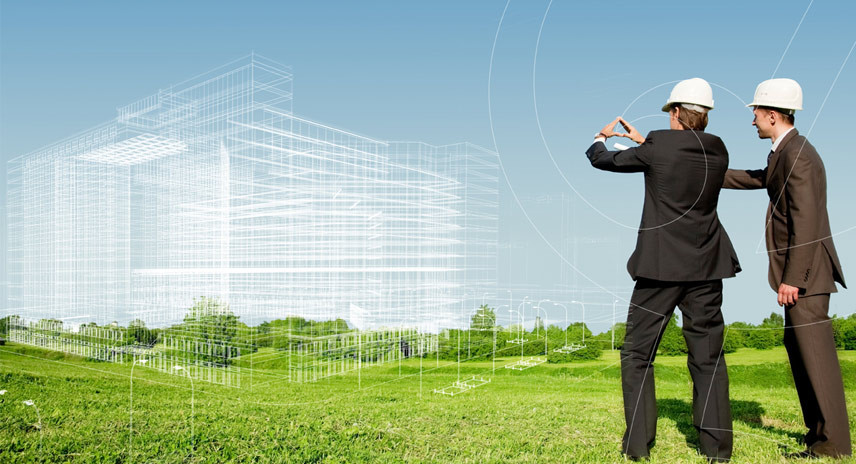
Image source: LinkedIn
The 8 Stages of the Property Development Lifecycle
Understanding the roadmap of a project is essential for anyone looking to partner with or hire a development firm. The process is rarely linear, but it generally follows these eight critical phases as outlined by industry standards.
-
Land Acquisition
This is the foundation of every project. Developers source raw land or underutilized buildings that have "hidden" potential. Modern firms use spatial intelligence to identify areas where demand is projected to outpace supply. This stage involves intense due diligence, including environmental assessments and title searches.
-
Marketing Determination
Before a single brick is laid, a developer must prove there is a market for the product. This involves demographic modeling and analyzing consumer trends. For example, a developer might determine that a specific neighborhood needs high-density "missing middle" housing rather than luxury retail based on local income levels and commuting patterns.
-
Building Program and Design
Working with architects, the developer defines the "highest and best use" of the site. This phase balances aesthetic appeal with functional efficiency. The goal is to maximize the square footage that can be leased or sold while adhering to local building codes and sustainability goals.
-
Public Approvals
Perhaps the most challenging stage, this involves navigating the bureaucracy of zoning boards, community councils, and environmental agencies. A developer must often present their case at public hearings, addressing concerns about traffic, school capacity, and neighborhood character.
-
Financing
Development financing is significantly more complex than a standard mortgage. It often involves a mix of equity, mezzanine debt, and construction loans. Developers must demonstrate a high degree of financial literacy to secure the capital necessary to move from the "soft" phase to the "hard" construction phase.
-
Construction
The physical transformation begins. The developer manages the general contractor to ensure the project stays on schedule and within budget. According to Procore , modern developers act as the central hub for all construction data, ensuring transparency across the build team.
-
Management and Leasing
As the building nears completion, the focus shifts to finding tenants or buyers. For commercial projects, this might involve securing "anchor tenants" who provide the stability needed to attract smaller retailers. For residential projects, it involves marketing the lifestyle benefits of the new development.
-
Final Sale or Exit
The final stage is the realization of profit. The developer may sell the entire asset to a Real Estate Investment Trust (REIT), sell individual units to homeowners, or choose to hold the property for long-term rental income. A successful exit validates the initial vision and provides the capital for the next project.
How to Vet a Property Developer Before You Sign a Contract
Choosing a partner in development is a high-stakes decision. Whether you are an investor or a landowner, you must look beyond the glossy brochures and evaluate the firm's technical and financial foundations.
Look for the "Big Three" Certifications
Professional designations provide a baseline of expertise and ethical standards. Top-rated developers often hold one or more of the following:
- CCIM Certified Commercial Investment Member: Widely regarded as the gold standard for financial and market analysis. A CCIM designation indicates the developer has completed a rigorous curriculum and has a proven track record of high-volume transactions. According to the University of San Diego , this is a key indicator of professional competence.
- LEED Leadership in Energy and Environmental Design: Essential for future-proofing assets. LEED-certified developers prioritize energy efficiency, which reduces long-term operating costs and increases the property's appeal to modern tenants.
- PMP Project Management Professional: While common in many industries, a PMP in development ensures the firm uses standardized, rigorous methodologies to manage timelines and budgets.
Portfolio and Financial Stability
Analyze their past projects for "neighborhood stabilization." Does the developer have a history of creating inclusive growth, or do they focus on "churn and burn" projects? Organizations like the St. Louis Development Corporation (SLDC) emphasize that top developers focus on long-term economic impact rather than just short-term gains. Furthermore, ask about their debt-to-equity ratios on previous projects to ensure they aren't over-leveraged.
Advanced Tech and Planning Techniques Modern Developers Use
The industry is currently undergoing a digital transformation. The most effective developers are those who leverage "Proptech" to reduce risk and optimize costs.
Platforms like SearchLand and Landstack allow developers to access millions of land titles and planning data points instantly. This helps them find off-market deals that others might miss.
Using Trimble Business Center , developers can create precision 3D surveys. Drones provide real-time topographic mapping, allowing for accurate site assessments before a shovel hits the ground.
This is the process of optimizing every component of a building to reduce costs without sacrificing quality. It requires deep collaboration between the developer and the engineering team.
The "Dirt Balance" Concept
One highly impactful technique used by sophisticated developers is "Dirt Balance." Moving soil is one of the most significant hidden costs in construction. By using advanced 3D modeling, developers can ensure that soil excavated in one part of the site is used as fill in another. This minimizes the need for massive transport trucks, reducing both costs and the project's carbon footprint. According to Aprao , these tech solutions are becoming standard for SMEs looking to scale.
What Should You Do If a Developer Offers to Buy Your Land?
It is common for homeowners in areas slated for rezoning to receive unsolicited offers from developers. These offers can be enticing, often reaching significantly above market value—sometimes as much as 2x the original purchase price.
Understanding the "2x Market Value" Phenomenon
Why would a developer offer $300,000 for a home valued at $150,000? The answer lies in the "residual land value." If the developer can replace that single-family home with a 10-unit apartment complex, the land itself becomes far more valuable than the structure sitting on it. They aren't buying your house; they are buying the potential of the dirt.
Calculating Replacement Cost
Before accepting an offer, do not look at your home's current market value. Instead, calculate the replacement cost . What will it cost you to buy a comparable home in the same neighborhood today? With rising interest rates and low inventory, a "high" offer might not actually be enough to maintain your current standard of living elsewhere. Negotiation tactics often include asking for a "long closing" (6-12 months) or a "rent-back" period, giving you ample time to find your next residence without pressure.
Why Some Developers Specialize in Specific Project Types
Not all developers are generalists. Specialization allows firms to build deep expertise in specific regulatory environments and construction methods.
- Residential Developers: Focus on everything from single-family subdivisions to high-rise condos. They must be experts in local school districts, amenities, and residential zoning.
- Commercial Developers: Specialize in retail, office, or industrial space. Their success depends on understanding logistics, foot traffic patterns, and the specific needs of corporate tenants.
- Equitable Developers: These firms, often working in public-private partnerships, focus on inclusive economic growth. They prioritize affordable housing and neighborhood stabilization, often utilizing tax credits and grants to make projects viable in underserved areas.
Frequently Asked Questions
- What is the average profit margin for a property development project?
- While margins vary by region and asset class, a typical target is 15% to 20% of the Gross Development Value (GDV). This margin is necessary to compensate for the high risks involved, including planning delays, interest rate hikes, and construction cost overruns.
- How much capital do I need to start in property development?
- Starting in development doesn't always require millions. Many begin on the "soft side" by sourcing deals and securing permits with relatively low capital, then partnering with larger firms for the "hard" construction phase. However, full-scale development usually requires significant equity—often 20% to 30% of the total project cost.
- What is the difference between a property developer and a contractor?
- The developer is the owner and visionary who secures the land and financing. The contractor is a service provider hired by the developer to execute the physical construction. The developer takes the financial risk; the contractor is paid a fee for their labor and expertise.
- How do property developers find off-market deals?
- Modern developers use proptech tools like SearchLand to filter for specific land characteristics, such as plot size, proximity to utilities, and planning history. They also build deep networks with local brokers and landowners to identify opportunities before they hit the open market.
- Are property developers responsible for infrastructure like roads?
- Yes, especially in large-scale land development. Developers are often required to build the "horizontal" infrastructure—roads, sewers, and utility connections—before they can begin "vertical" construction of buildings. These costs are factored into the initial feasibility study.
The Bottom Line
Property development is a high-stakes, high-reward industry that requires a unique blend of financial acumen, creative vision, and project management discipline. To navigate this landscape successfully, keep these key takeaways in mind:
- Developers are coordinators , acting as the central hub for architects, engineers, and contractors.
- The 8-stage lifecycle is the essential roadmap for every project, from acquisition to the final exit.
- Vetting is critical ; always look for CCIM, LEED, and PMP certifications to ensure professional competence.
- Proptech is a differentiator ; top firms use tools like SearchLand and 3D modeling to find value and reduce costs.
- Negotiation requires context ; if a developer offers to buy your land, focus on replacement cost rather than just market value.
- Specialization matters ; choose a firm that has a proven track record in the specific asset class you are pursuing.
Before entering into any development agreement, perform a thorough audit of the firm's past portfolio to ensure their vision aligns with your long-term goals.