Home
How to Make Millionaire Shortbread That Slices Perfectly Without Cracking
To achieve a professional-grade millionaire shortbread, you must master three specific technical hurdles: gluten control in the base, temperature precision in the caramel, and tempering in the chocolate. For a clean slice that doesn't crack, add a teaspoon of vegetable oil to your chocolate and ensure the caramel reaches exactly 225°F (107°C) . Slicing with a hot, dry knife while the chocolate is slightly above room temperature prevents the layers from shattering or separating.
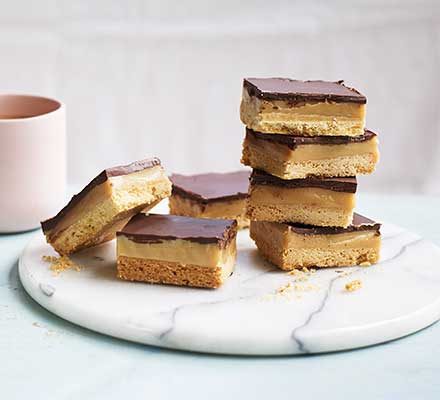
Image source: BBC Good Food
Why Millionaire Shortbread Is a Classic Confection Around the World
Millionaire shortbread, often referred to as a "caramel slice" or "caramel square," represents a significant advancement in the evolution of Scottish confectionery. While traditional shortbread dates back to the 15th or 16th century, the addition of caramel and chocolate layers is a relatively recent innovation, gaining widespread popularity in the early 1970s. According to historical records , the treat originated in Scotland but quickly became a staple in Australia and New Zealand.
The "Millionaire" branding serves as a descriptor for its richness. Unlike standard tea biscuits, this version is decadent, featuring high-fat butter, sweetened condensed milk, and high-quality cocoa. In different regions, you may hear it called "Wellington Squares" or simply "Caramel Squares." Regardless of the name, the trinity structure remains the same: a crumbly base, a soft but stable middle, and a firm topping.
Understanding the chemistry of these layers is essential for anyone looking to move beyond basic home baking. The interplay between the dry, sandy texture of the shortbread and the moisture-rich caramel requires careful management to prevent the base from becoming soggy. Similarly, the chocolate must be handled with care to ensure it adheres to the caramel without sliding off or blooming into a dull, white finish.
How to Prepare the Three Layers for Success
Before you begin, gathering the correct equipment is a non-negotiable step. A heavy-bottomed saucepan is vital for the caramel layer; thin pans create hot spots that lead to scorched sugar and separated fats. An 8-inch square baking pan is the standard for this recipe, providing the ideal thickness for each layer. If the pan is too large, the layers will be thin and prone to over-baking; if too small, the center may remain undercooked.
The workflow for millionaire shortbread is a marathon, not a sprint. You must allow each layer to cool or set appropriately before adding the next. Pouring hot caramel onto a hot base leads to a greasy finish, while pouring chocolate onto ice-cold caramel causes the chocolate to set too quickly, making it impossible to spread smoothly. Patience is arguably the most important ingredient in this process.
How to Bake a Shortbread Base With a Gourmet Shatter Texture
The foundation of a top-tier millionaire shortbread is a base that "shatters" rather than crumbles into dust. To achieve this, many professional bakers utilize a specific flour-to-corn-starch ratio. Adding corn starch (or cornflour) interferes with gluten development, resulting in a more tender, biscuit-like texture that holds its shape under the weight of the caramel.
The Egg Yolk Secret
While traditional shortbread uses only flour, sugar, and butter, adding a single egg yolk to the dough acts as a binder. This gourmet-level adjustment ensures that when you bite into the bar, the base stays intact rather than disintegrating. It also provides a richer color and a slightly softer bite that complements the chewy caramel.
Melted Butter vs. Cold Butter
There are two primary schools of thought regarding the butter state:
- Melted Butter: This method, often favored by America's Test Kitchen , involves whisking melted butter into the dry ingredients. It is faster, ensures a perfectly level base, and results in a crunchier texture.
- Cold Butter: The traditional method involves rubbing cold butter into the flour. This creates tiny pockets of fat that result in a flakier, more traditional shortbread feel.
To prevent the dreaded "soggy bottom," ensure the base is baked until it is a deep golden brown. Once removed from the oven, use the back of a metal spatula to press down firmly on the surface. This compacts the crumbs and creates a barrier that prevents the caramel moisture from seeping into the biscuit.
The Culinary Science of Achieving a Stable Caramel Set
The caramel layer is where most home bakers encounter failure. If the caramel is undercooked, it will ooze out when the bars are sliced; if overcooked, it becomes a hard toffee that is difficult to eat. The use of sweetened condensed milk is the industry standard for creating a stable emulsion that remains chewy at room temperature.
Precision is key here. You must use a candy thermometer to reach a temperature between 220°F and 225°F (104°C-107°C) . At this stage, the sugars have concentrated enough to hold their shape, but the moisture content remains high enough for a soft bite. According to NYT Cooking , looking for a "butterscotch pudding" color shift is a reliable visual cue if you lack a thermometer.
If your caramel begins to look oily or separated while boiling, do not panic. Remove it from the heat immediately and whisk in one to two tablespoons of warm milk or water . This helps re-emulsify the fats and sugars, returning the mixture to a smooth, glossy state.
For a deeper, more authentic flavor profile, consider using Lyle’s Golden Syrup instead of standard corn syrup. The toasted, buttery notes of golden syrup provide a complexity that ranks among the top choices for traditional British baking. Once the caramel is poured over the base, it must cool completely at room temperature before the chocolate is added.
How to Temper Chocolate for a Professional Snap and Sheen
Simply melting chocolate and pouring it over the caramel often leads to a dull, soft topping that melts on contact with fingers. To achieve a professional "snap," you must manage the Beta Crystals within the cocoa butter. This is done through a process called tempering.
The 75/25 Seeding Technique
The seeding method is a highly effective way to temper chocolate without complex equipment. Melt 75% of your chocolate gently in a double boiler until it reaches approximately 115°F. Remove from heat and stir in the remaining 25% of finely chopped chocolate. This "seeds" the mixture with stable crystals, encouraging the entire batch to solidify into a shiny, crisp layer.
The Oil Trick and Fork Scoring
To prevent the chocolate from cracking when you bite or slice into it, add a teaspoon of neutral vegetable oil or coconut oil to the melted chocolate. This provides just enough flexibility to the fat structure to prevent brittleness. Additionally, use a fork to lightly score the surface of the set caramel before pouring the chocolate. This gives the chocolate "grip," preventing the layers from sliding apart.
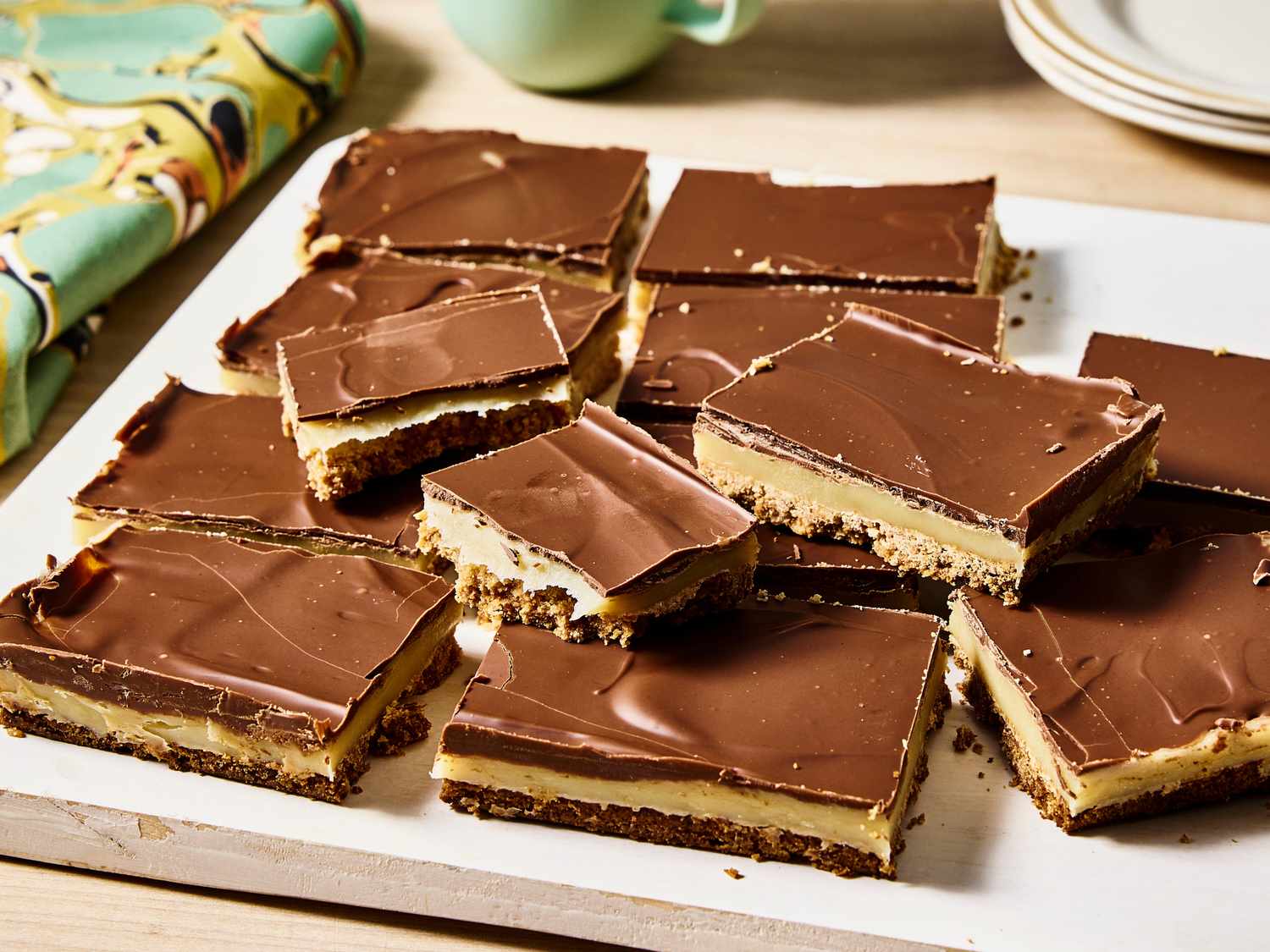
Image source: Allrecipes
How to Slice Millionaire Shortbread Without Breaking the Chocolate
The most common complaint when making this recipe is the chocolate layer shattering into shards during slicing. This usually happens because the chocolate is too cold and brittle, while the caramel underneath is too soft. To avoid this, follow the "Hot Knife Technique."
- Timing the Cut: Slice the bars when the chocolate is almost set, but still has a slight give. If you have already refrigerated the bars, let them sit at room temperature for 20 minutes before cutting.
- Heat the Blade: Dip a large, sharp chef's knife into a tall container of boiling water.
- Dry Thoroughly: Wipe the knife completely dry with a clean towel. Any water droplets can cause the chocolate to seize or bloom.
- Single Motion: Press the knife straight down through the layers. Do not saw back and forth. The heat from the blade will melt a tiny path through the chocolate, preventing it from cracking.
- Clean Between Cuts: Wipe the blade clean and re-heat it in the water for every single slice. This ensures the caramel doesn't smear onto the chocolate layer.
How Millionaire Shortbread Differs From Billionaire and Twix Bars
While they share a similar flavor profile, these three treats have distinct structural and ingredient differences. Millionaire shortbread is the foundation, but variations have emerged to cater to different levels of decadence.
| Feature | Millionaire Shortbread | Billionaire Shortbread | Twix Bar (Commercial) |
|---|---|---|---|
| Base | Traditional buttery shortbread | Often includes cocoa or sea salt | Mass-produced crunchy biscuit |
| Caramel | Condensed milk based | Double-layer or salted caramel | High-fructose corn syrup based |
| Chocolate | Dark or Milk (Tempered) | Dark chocolate with gold leaf/salt | Milk chocolate coating |
| Texture | Balanced chew and crunch | Ultra-rich and soft | Uniformly crisp |
How to Fix Common Baking Failures and Caramel Issues
Even experienced bakers encounter issues with these multi-layered bars. Most problems stem from temperature fluctuations or ingredient ratios. According to Sugar Spun Run , the most frequent failure is runny caramel, which is almost always caused by under-boiling the mixture.
Why is my caramel runny?
If your caramel doesn't hold its shape, it likely didn't reach the required 225°F. The water content in the condensed milk must evaporate sufficiently to allow the sugars to bond. If this happens, you can sometimes "save" the bars by keeping them refrigerated, though they will become messy at room temperature.
Why did my chocolate turn white?
This is known as "fat bloom." It occurs when the chocolate is cooled too slowly or not tempered correctly, causing the cocoa butter to separate and rise to the surface. While it looks unappealing, the chocolate is still safe to eat. To prevent this, ensure you use the seeding method and avoid placing hot chocolate directly into a cold refrigerator.
Why is the shortbread greasy?
A greasy base usually indicates that the butter was too warm when mixed or that the oven temperature was too low, causing the butter to melt out of the dough before the flour could set. Always use cool or room-temperature butter (unless using the specific ATK melted method) and ensure your oven is fully preheated.
Key Takeaways for Perfect Millionaire Shortbread
The Bottom Line
Mastering this classic treat requires a blend of patience and scientific precision. By focusing on these key areas, you can produce a result that stands out as a top-tier choice for any occasion.
- Use corn starch in your base for a professional "shatter" texture.
- Add an egg yolk to the shortbread to act as a binder for cleaner slices.
- Hit 225°F (107°C) exactly for the caramel to ensure it sets firmly but remains chewy.
- Seed your chocolate with 25% un-melted pieces to ensure a shiny, snappy finish.
- Add a teaspoon of oil to the chocolate to provide flexibility and prevent cracking.
- Score the caramel with a fork to give the chocolate layer a better grip.
- Use a hot, dry knife for every single cut to achieve gourmet-level presentation.
Start by calibrating your candy thermometer today to ensure your next batch of caramel sets with absolute precision.
Frequently Asked Questions
Can you freeze Millionaire Shortbread?
Yes, millionaire shortbread freezes exceptionally well. Wrap the sliced bars individually in plastic wrap and place them in an airtight container. They can be frozen for up to three months. When you are ready to serve, thaw them in the refrigerator overnight. Avoid thawing at room temperature too quickly, as this can cause condensation to form on the chocolate, leading to sugar bloom.
How long does it last at room temperature?
Due to the high sugar and fat content, which act as natural preservatives, millionaire shortbread can last for over one week at room temperature if stored in an airtight container. In warmer climates, it is better to store them in the refrigerator to prevent the caramel from becoming too soft, though they are best enjoyed when brought back to room temperature for 15 minutes before eating.
Why is it called Millionaire Shortbread?
The name is a playful nod to the richness of the ingredients. While traditional shortbread is a simple "poor man's" biscuit made of basic staples, the addition of expensive chocolate and a thick, decadent layer of caramel makes it "fit for a millionaire." It represents a luxurious upgrade to the standard Scottish tea treat.
Can I make this without condensed milk?
While condensed milk is the most reliable method for home bakers, you can make a traditional caramel using heavy cream, butter, and granulated sugar. This method requires much more precision and a longer boiling time to reach the "soft ball" stage. The condensed milk version is widely considered one of the best methods because the milk solids provide built-in stability for the emulsion.
What is the best chocolate to use for the topping?
A chocolate with approximately 60% cacao is highly recommended. This provides a sophisticated bitterness that balances the intense sweetness of the caramel. While milk chocolate is traditional, many find that a high-quality dark chocolate offers a more balanced flavor profile. Avoid using "chocolate chips" for the top layer, as they often contain stabilizers that prevent them from melting and setting smoothly.