Home
How to Make Tender Country Pork Ribs in the Oven or Smoker
To make tender country pork ribs, you must first identify if you have shoulder-cut or loin-cut ribs. For shoulder cuts, season with a dry rub, seal tightly in a foil-covered pan, and bake at 300°F for about 2.5 hours until the internal temperature reaches 195°F. Finish under the broiler with BBQ sauce for 5 minutes to achieve a tacky, caramelized glaze.
Country-style pork ribs are one of the most misunderstood items in the meat case. Despite their name, they aren't actually ribs at all. They are a budget-friendly, meaty alternative to traditional baby backs or St. Louis style ribs, offering a much higher meat-to-bone ratio. Because they are cut from different parts of the hog, knowing how to make country pork ribs requires a bit of detective work before you even turn on the oven.
In this guide, we will break down the science of collagen breakdown, the importance of the foil seal, and how to pivot your cooking method based on the specific cut you purchased. Whether you are looking for a "fall-apart" texture or a quick weeknight meal, mastering these ribs is a significant advancement for any home cook's repertoire.
What Are Country-Style Pork Ribs Exactly?
The first thing to understand is the "Rib Identity Myth." As noted by Grillin Fools , these are typically sliced from the blade end of the pork shoulder (the Boston Butt) or the pork loin. They are essentially pork chops or shoulder steaks that have been sliced into long, rib-like strips.
Why They Are Popular
Home cooks gravitate toward this cut for two primary reasons: price and protein. Typically priced around $2.00 to $3.00 per pound, they rank among the top budget-friendly pork options at the grocery store. Unlike traditional ribs, which are roughly 50% bone and gristle, country ribs are almost entirely meat. This makes them an excellent choice for feeding large families or meal prepping for the week.
Visual Identification
When shopping, you will notice two distinct looks. Shoulder-cut ribs are heavily marbled with fat and often contain a small piece of the shoulder blade bone. Loin-cut ribs look like lean, boneless pork chops that have been cut into thirds. According to Baking Mischief , the shoulder cut is widely considered one of the best options for slow roasting because the fat renders down, basting the meat from the inside out.
How to Tell Which Cut You Bought
Matching your cooking method to the cut is the difference between a tender meal and a dry, chewy disaster. Loin ribs and shoulder ribs are biologically different muscles that respond to heat in opposite ways.
| Feature | Shoulder (Blade) Cut | Loin Cut |
|---|---|---|
| Appearance | Darker meat, heavy marbling | Lighter pink, very lean |
| Fat Content | High (Internal & Cap) | Low (Lean muscle) |
| Target Temp | 195°F - 205°F | 145°F - 150°F |
| Best Method | Low and Slow (Braise/Smoke) | Quick Roast or Grill |
Label Reading Secrets
Look for keywords on the packaging. "Pork Shoulder Country Style Ribs" or "Blade End" indicates the fatty, braise-friendly cut. If the label says "Pork Loin Country Style Ribs," you are dealing with lean meat. As discussed in enthusiast circles like SmokingMeatForums , loin cuts will become incredibly tough if you try to cook them to 200°F, as they lack the connective tissue needed to stay moist at high temperatures.
How to Prepare Your Ribs for Maximum Flavor
Preparation is where you build the foundation of flavor. Because these ribs are thick, a simple sprinkle of salt isn't enough. You need a strategy that ensures the seasoning penetrates the meat and stays there during the long cooking process.
Before applying your rub, coat the ribs in a thin layer of plain yellow mustard. Don't worry—the vinegar and mustard flavor disappears during cooking. It acts as a "glue" for your spices and helps create a better crust (bark). This technique is highly recommended by pitmasters at Meat Church .
Crafting the Perfect Dry Rub
A balanced rub should have four components: Salt (flavor enhancer), Sugar (caramelization), Heat (pepper/chili), and Aromatics (garlic/onion). A standard ratio that stands out as a top choice for pork includes:
- 1/4 cup Brown Sugar
- 2 tbsp Smoked Paprika
- 1 tbsp Garlic Powder
- 1 tbsp Onion Powder
- 1 tsp Black Pepper
- 1 tsp Salt (adjust based on sauce saltiness)
Interestingly, Cook the Story suggests that for this specific cut, you should be cautious with heavy brining. Because the ribs release so much liquid during the braising phase, a pre-soak can sometimes lead to a "boiled" texture rather than a roasted one.
How to Make Country Pork Ribs in the Oven
The oven is the most reliable way to achieve consistent results. The goal is to create a "steam chamber" that breaks down the tough collagen in shoulder cuts without drying out the exterior.
Setting the Temperature
You have two main paths: 250°F for 3.5 to 4 hours, or 300°F-325°F for 2 to 2.5 hours. While the lower temperature is a popular choice for maximum tenderness, the 300°F range is often preferred for home cooks who want a balance of speed and quality.
The Essential Foil Seal
This is the most critical step. Use a rimmed baking sheet or a 9x13 glass dish. Arrange the seasoned ribs in a single layer. Cover the pan with a double layer of heavy-duty aluminum foil. According to Healthy Recipes Blogs , a weak seal allows steam to escape, which prevents the internal temperature from rising high enough to melt the connective tissue.
- Preheat and Prep: Set your oven to 300°F. Apply the mustard binder and dry rub to all sides of the ribs.
- Arrange: Place the ribs in the pan. If using shoulder ribs, place them fat-side up so the fat renders down into the meat.
- The Seal: Crimp the foil tightly around the edges of the pan. There should be no visible gaps.
- The Low and Slow Phase: Bake for 2 hours. At this point, the ribs will be sitting in a pool of their own rendered fat and juices.
- The Tenderness Check: Carefully peel back a corner of the foil. Use a fork to twist a piece of the meat. If it resists, reseal and cook for another 30 minutes.
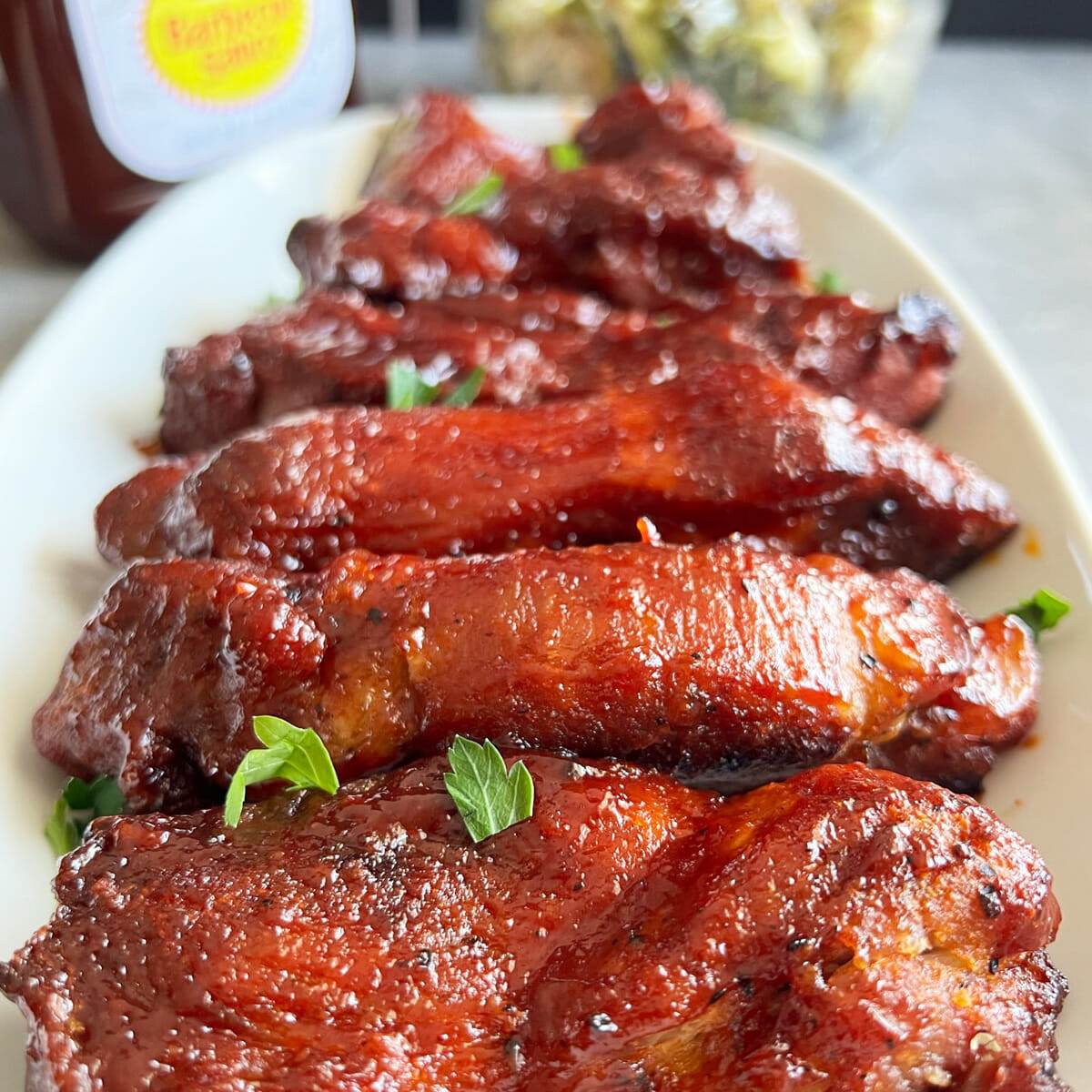
Image source: Recipe Teacher
How to Get the Perfect BBQ Finish
When the ribs come out of the foil, they often look grey and unappetizing. This is normal. The final step is where you add the "tacky" BBQ finish that defines great ribs.
The Caramelization Step
Drain the excess liquid from the pan (or move the ribs to a clean, foil-lined tray). Brush your favorite BBQ sauce generously over the ribs. If you want a more complex flavor, consider a blend of sweet BBQ sauce and a splash of apple cider vinegar or pineapple juice.
The 5-Minute Broil
Set your oven to "Broil" on high. Place the sauced ribs on the middle rack. Watch them like a hawk! You want the sugars in the sauce to bubble and char slightly, but it can go from perfect to burnt in 30 seconds. This high-heat finish is a significant improvement over just serving them straight from the braise.
"The broiler is your friend, but it's also a fickle one. Stay by the oven door and look for the sauce to transition from liquid to a sticky, dark mahogany glaze."
How to Smoke Country-Style Ribs for Better Bark
If you have a pellet grill or offset smoker, country ribs are an exceptionally strong candidate for a weekend cook. Smoking allows you to develop a "bark"—a flavorful, dark crust—that the oven simply cannot replicate.
The No-Wrap Method
While oven cooking requires foil, Chiles and Smoke suggests that a no-wrap method at 275°F for 3 to 4 hours produces a superior texture. By leaving the ribs exposed to the smoke, the fat renders more slowly and the exterior develops a satisfying crunch.
Wood Selection and Internal Temps
Pork pairs exceptionally well with fruitwoods like Apple or Cherry, which provide a subtle sweetness. For a bolder flavor, Hickory is a top-tier choice. Aim for an internal temperature of 165°F before you even consider wrapping or saucing. The final pull temp should be 195°F to 205°F for that classic "fall-apart" shoulder texture.
How to Turn Country Ribs into BBQ Burnt Ends
One of the most innovative ways to prepare this cut is by turning them into "Pork Burnt Ends." This method, popularized by Smoking-Meat.com, treats the ribs like a brisket point.
The Cubing Technique
Before cooking, cut the raw country ribs into 1.5-inch cubes. Toss them in your dry rub and smoke or roast them at 275°F for about 2 hours. Because of the increased surface area, you get more bark and seasoning in every bite.
The Double-Sauce Method
After the initial cook, place the cubes in a foil pan. Toss them with BBQ sauce, a few pats of butter, and a drizzle of honey. Cover the pan and return it to the heat for another hour. The result is a tray of meat "candy" that is exceptionally strong as an appetizer or a main course served over white bread.
Why Are My Country Ribs Still Tough?
It is a common frustration: you've cooked the ribs for two hours, but they are still chewy. This usually boils down to one of three issues.
The Connective Tissue Problem
Pork shoulder is full of collagen. Collagen doesn't melt until it reaches a specific temperature—usually starting around 160°F and finishing around 190°F. If you pull your ribs out at 170°F (which is technically "safe" to eat), they will be incredibly tough because the collagen hasn't turned into gelatin yet. You must push through the "stall" to reach that 195°F mark.
The Loin Mistake
If you bought loin-cut ribs and cooked them for 3 hours, they will be tough because they are overcooked and dry. Loin meat has almost no collagen. Once it passes 155°F, the muscle fibers tighten and squeeze out all the moisture. If your ribs look like white meat and are dry, you likely had the loin cut and overcooked it.
The Weak Seal
As mentioned earlier, the steam is what does the heavy lifting in an oven braise. If your foil wasn't tight, the moisture escaped, and the meat likely reached a plateau where it couldn't get hot enough to break down the fibers, but was hot enough to dry out. Always use heavy-duty foil for a top-tier seal.
Final Takeaways for Perfect Ribs
- Identify the Cut: Check the label for "Shoulder/Blade" (fatty) vs "Loin" (lean).
- Use a Binder: Apply yellow mustard before your dry rub to ensure maximum flavor adhesion.
- Seal it Tight: Use double foil in the oven to create a pressurized steam environment.
- Target 195°F: For shoulder cuts, don't stop at "safe" (145°F); go for "tender" (195°F+).
- The Broiler Finish: Always sauce and broil for 3-5 minutes at the end for a professional look.
- Rest the Meat: Let the ribs sit for 10 minutes after cooking to allow the juices to redistribute.
Success with country ribs depends entirely on matching your cooking time to the specific muscle group you purchased.
Frequently Asked Questions
How long do I cook country ribs at 350°F?
Cooking at 350°F is faster but carries a higher risk of drying out the meat. Typically, shoulder-cut ribs will take about 75 to 90 minutes at this temperature if tightly sealed in foil. However, most experts recommend a lower temperature, such as 300°F, to allow the connective tissue more time to break down without the exterior becoming mushy. If you are in a rush, 350°F works, but ensure you have plenty of liquid (like apple juice or BBQ sauce) in the pan to maintain moisture.
Can I cook these in an Air Fryer?
Yes, but the air fryer is best suited for loin-cut country ribs. Because the air fryer cooks with intense, circulating dry heat, it acts more like a grill. Loin ribs can be cooked at 375°F for 12-15 minutes until they reach an internal temp of 145°F. Shoulder-cut ribs, however, generally do not fare well in an air fryer unless you cook them at a very low setting for a long time, as the high heat will toughen the meat before the fat can render.
Do I need to remove a membrane?
No. Unlike baby back ribs or spare ribs, which have a tough, papery silverskin membrane on the bone side, country-style ribs do not have a membrane. Since they are sliced from the shoulder or loin, the "rib" structure is already broken down. You can apply your rub directly to all sides of the meat without any tedious prep work, which is one of the reasons this cut is a popular choice for quick preparation.
How many ribs should I serve per person?
A standard "generous" serving is typically 2 large country-style ribs per person. Because these ribs are much meatier than traditional pork ribs, two pieces usually equate to 6-8 ounces of cooked protein. If you are serving them alongside heavy sides like mac and cheese or cornbread, some guests may only eat one. For a party, it is safe to estimate 1.5 to 2 ribs per adult to ensure everyone is satisfied.
Can I make these in a slow cooker?
Absolutely. The slow cooker is an excellent tool for shoulder-cut country ribs. You can cook them on "Low" for 7-8 hours or "High" for 4 hours. The moist environment of the crockpot is perfect for breaking down collagen. Just be sure to finish them under the broiler for a few minutes after they come out of the slow cooker; otherwise, the meat will be tender but will lack the desirable caramelized crust and color.