Home
Is Fresh Coriander the Same as Cilantro and How Do You Use It?
Fresh coriander is one of the most polarizing yet essential herbs in the global culinary landscape. Whether you are preparing a vibrant Mexican salsa, a rich Indian curry, or a refreshing Thai salad, this herb provides a unique aromatic profile that few other ingredients can replicate. However, for many home cooks, the terminology surrounding the plant causes significant confusion. Depending on where you live, you might find it labeled as cilantro, Chinese parsley, or simply coriander.
Beyond the naming conventions, fresh coriander presents practical challenges. It is notorious for wilting within days of purchase, and for a specific segment of the population, it possesses a distinct, unpleasant soapy taste. Understanding the botanical nuances, genetic factors, and advanced preservation techniques can transform how you interact with this versatile herb. This guide explores the depths of Coriandrum sativum , from its linguistic roots to the "electric" flavor of its unripe seeds.
Why Do People Call the Same Plant Both Coriander and Cilantro?
The confusion between cilantro and coriander is primarily a result of linguistic history and regional culinary traditions. Botanically, every part of the plant—from the roots to the delicate white flowers—belongs to the species Coriandrum sativum . However, the common names used to describe these parts vary significantly across the English-speaking world, according to Wikipedia's botanical records .
The North American Convention
In the United States and Canada, the term "cilantro" is used exclusively to refer to the fresh green leaves and stems of the plant. This preference stems from the heavy influence of Mexican cuisine in North America; "cilantro" is the Spanish word for coriander. Meanwhile, the word "coriander" is reserved for the dried, tan-colored seeds of the same plant. If a recipe in the U.S. calls for "ground coriander," it is referring to the spice cabinet staple, not the fresh herb in the produce aisle.
The International Convention
In the United Kingdom, Australia, South Africa, and India, the term "cilantro" is rarely used. Instead, the fresh leaves are referred to as "fresh coriander" or "coriander leaves." The seeds are simply called "coriander seeds." This convention aligns more closely with the plant's Latin roots. For international readers, "fresh coriander" is the standard term for the herb used as a garnish or stirred into dishes at the end of cooking.
Etymology and History
The word "coriander" has a fascinating and somewhat unappetizing history. It originates from the Greek word kóris , which translates to "bed bug." This name was given by ancient Greeks who believed the aroma of the bruised leaves resembled the pungent smell of bed bugs. Despite this association, the herb has been cultivated for thousands of years, appearing in ancient Egyptian tombs and mentioned in the Old Testament. Its ability to thrive in various climates has made it a staple across disparate cultures, each adopting its own name for the plant.
Why Does Fresh Coriander Taste Like Soap to Some People?
If you have ever served a dish garnished with fresh coriander only to have a guest complain that it tastes like dish soap or dirt, you have witnessed a fascinating genetic phenomenon. This is not a matter of picky eating or an unrefined palate; it is a biological reality rooted in human DNA.
The OR6A2 Gene
Research has identified a specific genetic variation in the OR6A2 gene that influences how individuals perceive the aroma of coriander. This gene encodes a receptor that is highly sensitive to aldehyde chemicals. Fresh coriander contains several aldehydes that contribute to its characteristic scent. For those with this genetic variation, the brain interprets these aldehydes as the smell of soap or even decomposing insects. According to genetic studies cited by Wikipedia , this trait is highly heritable.
- East Asians: Approximately 21% perceive a soapy taste.
- Europeans: Roughly 17% carry the genetic variation.
- South Asians and Hispanics: Only 3% to 7% report the soapy sensation, likely due to the herb's long-standing prevalence in these regional diets.
Twin Studies and Preference
Scientific studies involving identical and fraternal twins have further solidified the genetic link. Approximately 80% of identical twins share the same preference (or dislike) for fresh coriander, whereas fraternal twins—who share only half their DNA—show a much lower correlation. This suggests that while culture and exposure play a role, biology is the primary driver of the "soap" perception.
Culinary Workarounds
If you or someone you cook for has the "soap gene," there are ways to mitigate the unpleasant flavor. Crushing the leaves or finely mincing them allows enzymes to break down the offending aldehydes more quickly. Additionally, cooking the coriander rather than using it raw as a garnish can significantly alter its chemical profile, making it more palatable to those who usually find it offensive. Alternatively, substituting with a mix of parsley and mint can provide a similar visual appeal without the soapy aftertaste.
How to Identify the Different Parts of the Coriander Plant
Most consumers only interact with the uniform bunches of coriander found in supermarkets, but the plant undergoes a dramatic transformation as it grows. Each stage of its life cycle offers a different culinary application. Understanding these distinctions is a hallmark of advanced cooking, as noted by experts at Forager Chef .
Basal Leaves
These are the broad, flat leaves found at the base of the plant during its early growth. They closely resemble flat-leaf parsley. Basal leaves are the most common form found in stores and are preferred for their mild, citrusy flavor. They are ideal for raw garnishes, salsas, and salads where a delicate texture is required.
Stalk Leaves
As the plant matures and prepares to flower, it produces "stalk leaves." These are fine, feathery, and almost dill-like in appearance. Stalk leaves have a much more intense, "piercing" aroma compared to basal leaves. They are often preferred in Southeast Asian stir-frys where the herb needs to stand up to high heat and bold spices.
| Plant Part | Flavor Profile | Best Culinary Use | Texture |
|---|---|---|---|
| Basal Leaves | Mild, Citrus, Bright | Garnishes, Salsas, Guacamole | Soft, Broad |
| Stalk Leaves | Intense, Pungent, Floral | Stir-frys, Marinades | Feathery, Fine |
| Green Seeds | Electric Citrus, Peppery | Pickling, Curry Pastes | Crunchy, Juicy |
| Dried Seeds | Warm, Nutty, Earthy | Spice Blends, Baking | Hard, Grainy |
| Roots | Deep, Earthy, Peppery | Thai Curry Bases, Soups | Fibrous, Tough |
How to Keep Fresh Coriander From Wilting for Up to Two Weeks
The primary frustration with fresh coriander is its incredibly short shelf life. Within days of bringing a bunch home, the leaves often turn into a slimy, yellowing mess. This happens because coriander is highly sensitive to both dehydration and excess moisture trapped against the leaves. To combat this, you can use advanced storage techniques that rank among the most effective methods for herb preservation.
The 2L Bottle "Bouquet" Method
This method treats the coriander like a living plant rather than a harvested vegetable. It provides the stems with hydration while protecting the leaves from the drying effects of refrigerator air. This technique can keep coriander vibrant for 10 to 14 days.
- Prepare the Bottle: Take a clean 2-liter plastic soda bottle and cut it in half, so the bottom section is about 7 inches tall.
- Hydrate: Fill the bottom of the bottle with 1 to 2 inches of cold water.
- Trim the Stems: Remove any elastic bands or ties from the coriander bunch. Trim the bottom half-inch of the stems at an angle to open up the vascular system.
- Arrange: Place the coriander stems into the water, ensuring no leaves are submerged (submerged leaves will rot).
- Cap It: Place the top half of the bottle (or a loose plastic bag) over the leaves to create a mini-greenhouse. Store this in the refrigerator door.
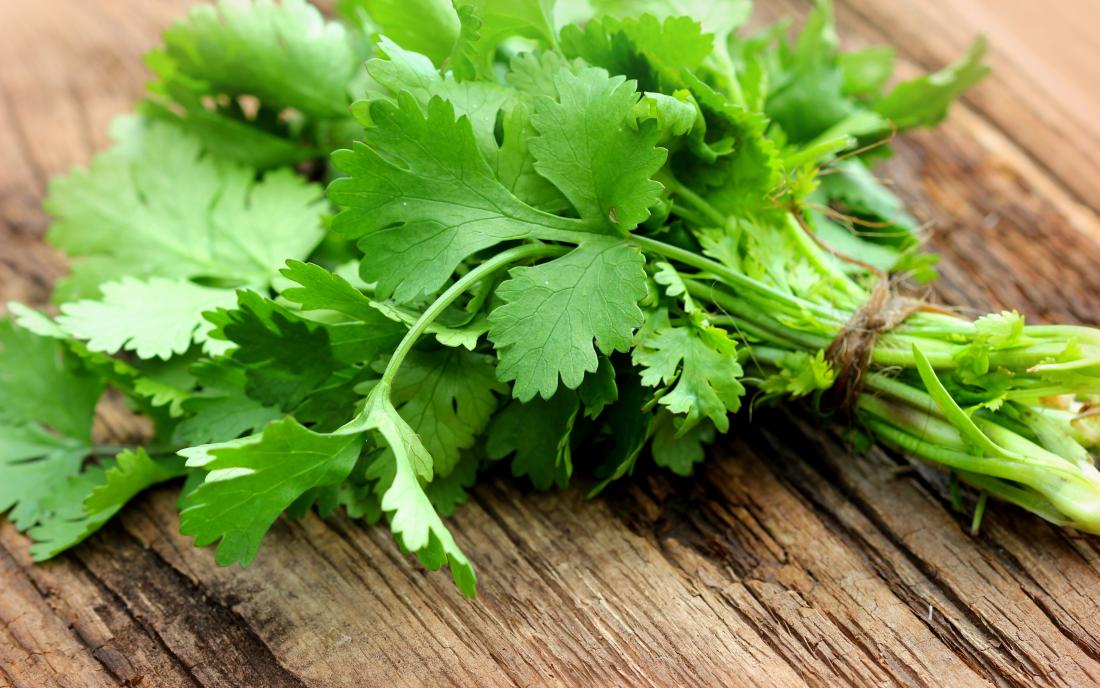
Image source: Medical News Today
The "Coriander Sausage" Freeze
If you have more coriander than you can use in two weeks, freezing is a top-tier option for cooking applications. While frozen coriander loses its crispness and cannot be used as a raw garnish, its flavor remains exceptionally strong in cooked dishes.
To create a "coriander sausage," wash and thoroughly dry the leaves. Place them in a tight line on a piece of plastic wrap or parchment paper. Roll the wrap tightly to create a dense cylinder (the sausage). Twist the ends and freeze. When you need coriander for a soup or curry, simply slice off a "round" of the frozen herb and drop it directly into the pot. This method prevents freezer burn and keeps the herb usable for over four months.
How to Use Green Coriander Seeds as a Secret Ingredient
While most cooks are familiar with the leaves and the dried brown seeds, the intermediate stage—the green, unripe seed—is a hidden gem in the culinary world. These small green spheres appear after the plant flowers but before the seeds dry out and turn brown. They offer a flavor profile that is widely considered one of the most unique in the herb garden.
The "Electric" Flavor Profile
Green coriander seeds taste like a concentrated version of the leaves mixed with a floral, citrusy pop. Some chefs describe the sensation as "electric" because of the bright, zingy way the flavor hits the palate. They lack the dusty, earthy notes of dried coriander and the soapiness that some find in the leaves. According to culinary guides from Forager Chef , they are a seasonal delicacy that should not be overlooked.
Preparation and Preservation
Because green seeds are round and firm, they are difficult to chop with a standard chef's knife—they tend to roll away. The most effective way to prepare them is to crush them using the flat side of a blade or a mortar and pestle (molcajete). This releases the aromatic oils instantly.
To preserve this fleeting seasonal ingredient, you can ferment them in a simple 2% salt brine, which creates a condiment similar to capers but with a coriander kick. Alternatively, you can freeze them in small jars to preserve that "fresh-pop" flavor for use in winter stews and marinades.
Why Your Coriander Keeps Flowering and How to Stop It
For home gardeners, coriander is often a source of frustration. You plant it, harvest a few leaves, and suddenly the plant shoots upward, produces feathery leaves, and starts flowering. This process is known as "bolting," and it effectively ends the production of the broad basal leaves most people want.
Understanding Photoperiodism
Coriander is highly sensitive to day length and temperature, a biological response known as photoperiodism. As days get longer and temperatures rise in late spring and summer, the plant receives a hormonal signal to stop leaf production and focus on reproduction (seeds). In northern or subarctic climates, the long summer days can cause coriander to bolt almost immediately after sprouting, as detailed by Frosty Garden .
The "Calypso" Variety and Successive Sowing
If you struggle with bolting, look for a specific variety called "Calypso." This cultivar is widely regarded as one of the most bolt-resistant options available, staying in the leaf-producing stage for much longer than standard varieties. Additionally, the most effective strategy for a constant supply is "successive sowing"—planting a new batch of seeds every 10 to 14 days. This ensures that as one batch bolts, a new batch is ready for harvest.
What Are the Best Substitutes for Fresh Coriander?
Whether you have the "soap gene" or simply realized you are out of the herb mid-recipe, finding a suitable replacement is essential. Because coriander has such a distinct flavor, no single herb is a perfect match, but combinations can come close.
- For Visual Garnish: Flat-leaf (Italian) parsley is the closest visual match. It provides a fresh, green look but lacks the citrusy punch.
- For Flavor Depth: A mixture of equal parts parsley, mint, and Thai basil, finished with a squeeze of fresh lime juice, mimics the complex aromatic profile of coriander.
- For Southeast Asian Dishes: Look for Culantro (also known as sawtooth herb). It is a different species but contains the same aromatic compounds in a much more concentrated form. It stands up better to long cooking times.
- What to Avoid: Never substitute dried coriander seeds for fresh leaves. The flavor profiles are entirely different—one is warm and nutty, the other is bright and citrusy. Using seeds in place of leaves will fundamentally change the character of your dish.
The Bottom Line on Buying and Using Fresh Coriander
Mastering fresh coriander requires a mix of linguistic awareness, biological understanding, and proper storage habits. Here are the key takeaways to remember:
- Identify by Region: Remember that "cilantro" and "fresh coriander" are identical; the name changes based on whether you are in North America or the UK/International regions.
- Respect the Genetics: If a guest finds the herb "soapy," it is due to the OR6A2 gene; try cooking the herb or crushing it to reduce the aldehyde impact.
- Use the Bouquet Method: Store your coriander in a jar of water with a plastic cover in the fridge to keep it fresh for up to two weeks.
- Explore Green Seeds: If your garden plants bolt, don't throw them away; harvest the green seeds for an "electric" citrus flavor boost.
- Choose Bolt-Resistant Varieties: Plant "Calypso" seeds and use successive sowing to maintain a steady supply of leaves throughout the summer.
- Match the Leaf to the Dish: Use broad basal leaves for raw garnishes and feathery stalk leaves for high-heat stir-frys.
Next time you are at the market, look for bunches with vibrant green leaves and firm stems, and implement the bouquet storage method immediately upon returning home to ensure your herbs stay fresh for your next culinary creation.
Frequently Asked Questions