Home
What Is Back Bacon and How Does It Differ From American Streaky Bacon?
Back bacon is a traditional British and Irish cut of pork that combines the lean loin (the "eye") and a portion of the fatty belly (the "strap"). Unlike American bacon, which is made exclusively from the belly, back bacon is meatier, leaner, and typically sold as raw "rashers." In the United States, it is often confused with "Canadian bacon," though authentic back bacon includes a fat cap and is usually sold raw rather than pre-cooked.
For many breakfast enthusiasts, the word "bacon" evokes images of thin, crispy strips of fat-marinated pork belly. However, in the United Kingdom, Ireland, and Canada, the term refers to something entirely different. Back bacon stands out as a top choice for those who prefer a meatier, more substantial bite that bridges the gap between a pork chop and a traditional breakfast strip.
Understanding the nuances of back bacon requires a look at porcine anatomy, regional curing traditions, and the specific culinary techniques that prevent this leaner cut from drying out. Whether you are a British expat searching for a taste of home or a home cook looking to diversify your morning menu, this guide explores the science and culture behind the proper rasher.
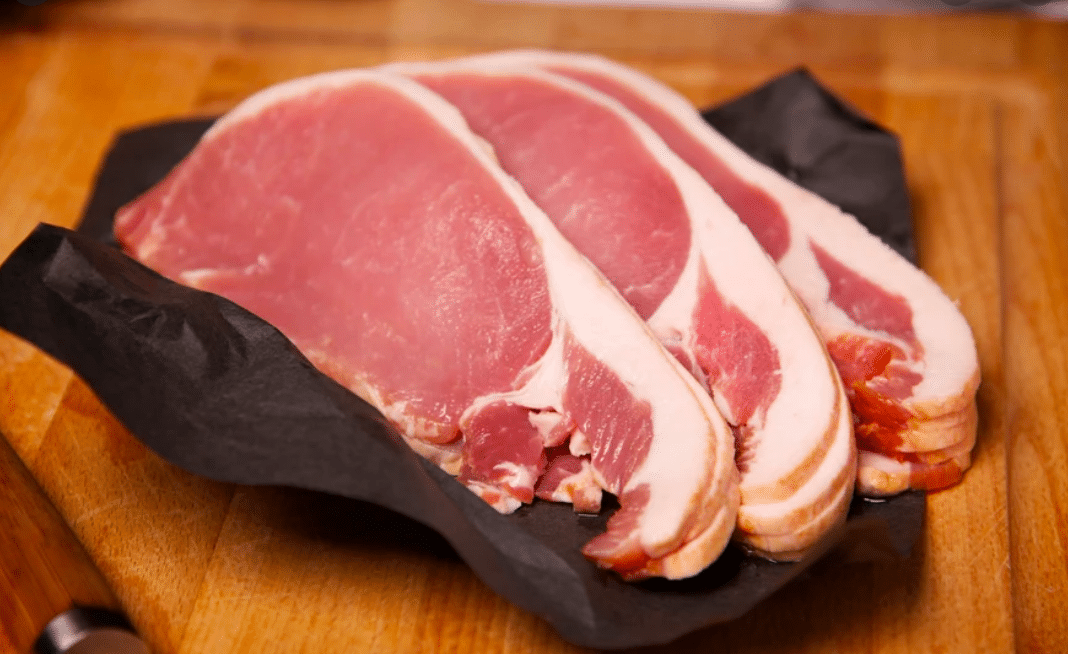
Image source: Bradley Smoker
Why the Anatomy of a Rasher Makes It Unique
The primary distinction of back bacon lies in its anatomical origin. While American "streaky" bacon comes from the side or belly of the pig, back bacon is harvested from the middle of the pig's back. This location provides a hybrid cut that offers the best of both worlds: the tenderness of the loin and the richness of the belly.
The Hybrid Cut
A single slice of back bacon, known in the UK and Ireland as a rasher , is not a uniform muscle. It consists of the Longissimus dorsi (the lean loin eye) and the Panniculus carnosus (the fatty "strap" or tail). According to the English Breakfast Society , an authentic rasher must contain both the loin and the belly attachment to provide the correct balance of texture and flavor.
The "Comma" Shape
When sliced, back bacon takes on a distinctive "comma" or "teardrop" shape. The large, circular end is the lean loin, while the tapering tail is the fatty belly. This structure is why back bacon is widely considered one of the best options for sandwiches; the lean portion provides the bulk of the protein, while the fatty tail renders down to provide moisture and a salty crunch.
Terminology: Rashers vs. Strips
In the United States, bacon is measured in "slices" or "strips." In the British Isles, the standard unit is the "rasher." While the terms are often used interchangeably, "rasher" specifically implies the back cut. If you order "bacon" in a London cafe, you will receive back bacon by default; if you want the American style, you must explicitly ask for "streaky bacon."
Back Bacon vs. Canadian Bacon vs. Streaky Bacon
The confusion surrounding these terms often stems from international marketing. To clarify the differences, we must look at the fat content, preparation methods, and regional naming conventions.
| Criteria | Back Bacon (UK/Ireland) | Streaky Bacon (USA) | Canadian Bacon (USA Market) |
|---|---|---|---|
| Cut of Meat | Loin + Belly Strap | Pork Belly | Loin Eye Only |
| Fat Content | Medium (Lean with fat cap) | High (Intercostal fat) | Low (Very lean) |
| Typical State | Raw / Cured | Raw / Cured | Fully Cooked / Smoked |
| Regional Name | Rashers | Bacon | Canadian Bacon |
As noted by Wikipedia , the texture and flavor profiles vary significantly. Streaky bacon is prized for its ability to become shatteringly crisp due to its high fat-to-meat ratio. In contrast, back bacon offers a "meaty" bite similar to a thin pork chop but with the concentrated, salty finish of a cured product. Canadian bacon, as sold in the US, is often ham-like and lacks the fat strap necessary for rendering, making it a different culinary experience altogether.
The Secret History of Why We Call It Canadian Bacon
If you ask for "Canadian bacon" in Toronto, you might receive a confused look. In Canada, the product is simply called "back bacon." The term "Canadian bacon" is actually a US marketing invention that dates back to the late 19th century.
The Marketing Myth
During a period of pork shortages in the United States, loin medallions were imported from Toronto to New York City. To differentiate this leaner, imported product from domestic belly bacon, New York butchers labeled it "Canadian-style bacon." Over time, the name stuck, even though the US version evolved into a fully cooked, cylindrical product that bears little resemblance to the raw rashers found in Canada or the UK.
The Peameal Distinction
Canada has its own unique variation known as peameal bacon . This is a specific type of unsmoked back bacon that has been cured and rolled in yellow cornmeal (historically, crushed dried yellow peas were used, hence the name). It is a staple of the St. Lawrence Market in Toronto and represents a significant advancement in regional charcuterie, offering a juicy, tender texture that is notably innovative compared to standard cured loins.
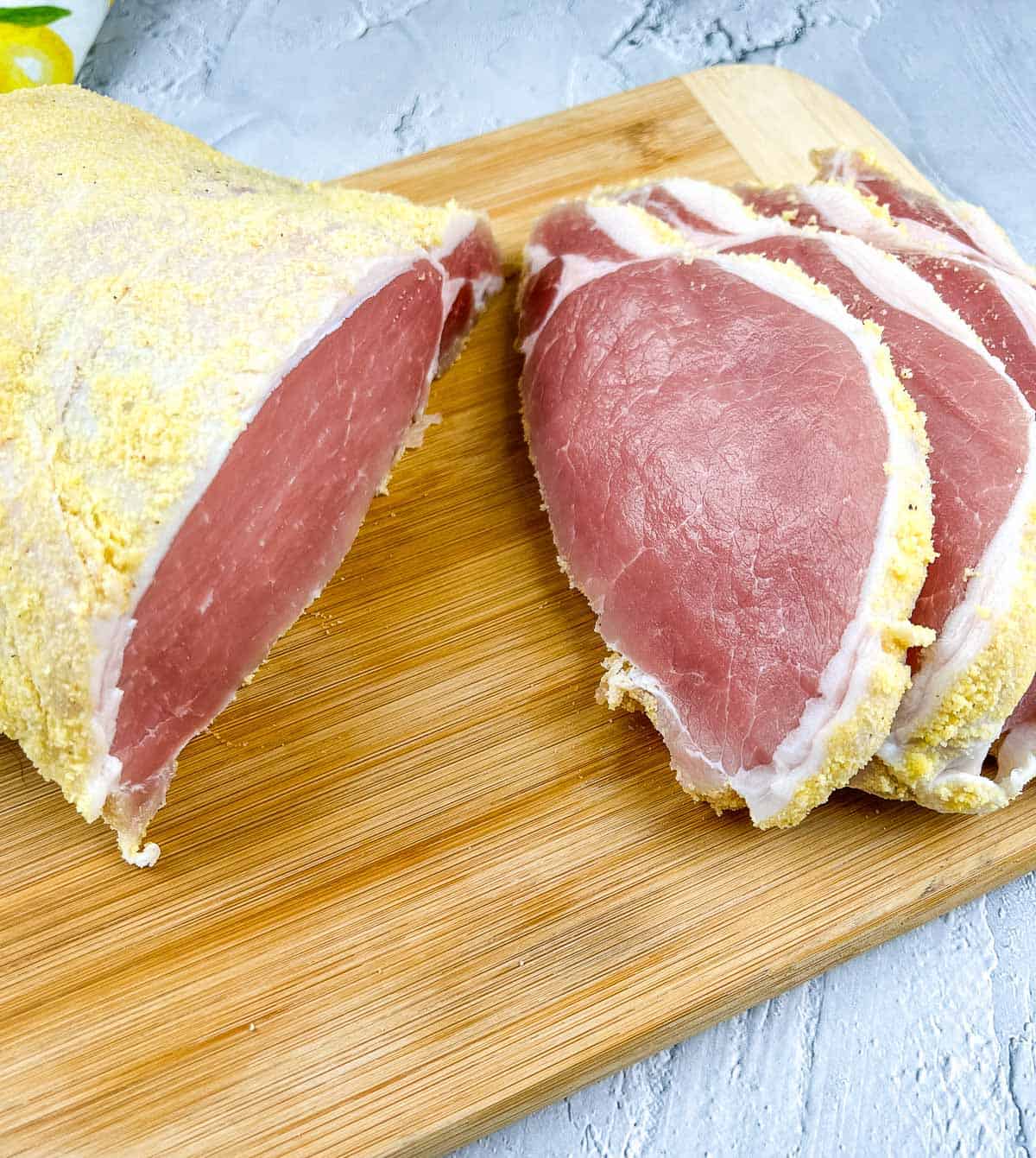
Image source: Cook What You Love
Why Genetics and Curing Define the British Rasher
The quality of back bacon is not just about the cut; it is about the pig itself. In the UK, specific "bacon breeds" have been developed over centuries to produce the ideal ratio of loin to belly.
The "Bacon Breed" Factor
Breeds such as the Yorkshire (Large White) and the Tamworth are genetically optimized for back bacon production. These pigs are longer in the body than American commodity breeds, providing a larger loin area. The Tamworth, in particular, is often cited by heritage farmers as a top-tier choice for bacon because of its ability to develop a thick, flavorful fat cap without becoming overly greasy.
Smoked vs. Green Bacon
In the world of rashers, you must choose between "smoked" and "green."
- Smoked Bacon: Cured and then exposed to wood smoke (often oak or hickory). This is the most popular choice for a Full English breakfast.
- Green Bacon: This is unsmoked bacon. It is cured in a salt brine but never hits the smokehouse. Irish styles often lean toward green bacon, which has a cleaner, sweeter pork flavor.
Traditional curing involves a two-week process of dry-salting or immersion in a "Middlesbrough" style brine. This differs from modern commercial bacon, which is often "pumped" with water and nitrates to speed up production. Traditional back bacon will not shrink significantly in the pan, whereas mass-produced versions often release a white, watery residue.
How to Find and Buy Authentic British Rashers in the US
For those living in the United States, finding authentic back bacon can be a challenge. Most grocery stores stock "Canadian bacon," which is pre-cooked and lacks the essential fatty strap. However, there are several ways to source the real thing.
The Grocery Store Search
Look for brands that specialize in British or Irish imports. Brands like Jolly Posh Foods or Spencer’s are widely regarded as among the top options for authentic rashers in the US market. These products are sold raw and hand-trimmed, ensuring they behave correctly in the frying pan. You can often find them in the specialty meat case or at international grocers.
Online Sourcing
If local options are unavailable, online vendors like Porter Road or Jolly Posh offer nationwide shipping. These vendors typically use heritage breed pork and traditional curing methods, providing a product that sets a high standard for quality compared to supermarket alternatives.
The Science of Cooking Back Bacon Without It Drying Out
Because back bacon is leaner than belly bacon, it is prone to drying out if cooked like a standard American strip. The goal is to render the fatty tail while keeping the loin eye juicy and tender.
The "Anti-Curl" Method
One of the most common frustrations with back bacon is "curling." Because the lean loin and the fatty strap have different densities and moisture levels, they shrink at different rates, causing the rasher to bow or curl in the pan. To prevent this, many chefs recommend "nicking" the fat cap with a sharp knife every half-inch before cooking. This breaks the tension and allows the slice to stay flat.
The Oven-Baking Technique
While pan-frying is traditional, testing by The Kitchn suggests that oven-baking is a highly effective method for thick-cut meats.
- Preheat your oven to 350°F (175°C).
- Line a baking sheet with parchment paper (this prevents sticking and aids in even heat distribution).
- Lay the rashers flat, ensuring they do not overlap.
- Bake for 12–15 minutes for a tender bite, or up to 20 minutes if you prefer the edges to be crisp.
- Remove and let rest for 60 seconds; the residual heat will finish rendering the fat without overcooking the lean center.
The Perfect Bacon Butty
No discussion of back bacon is complete without the Bacon Butty . This iconic British sandwich consists of two slices of white bread (or a flour-dusted bap), a generous spread of salted butter, and 3-4 hot rashers. The key is the sauce: the UK is divided between HP Brown Sauce (tangy and spicy) and Daddies Ketchup . The heat from the bacon melts the butter into the bread, creating a simple yet exceptionally strong flavor profile.
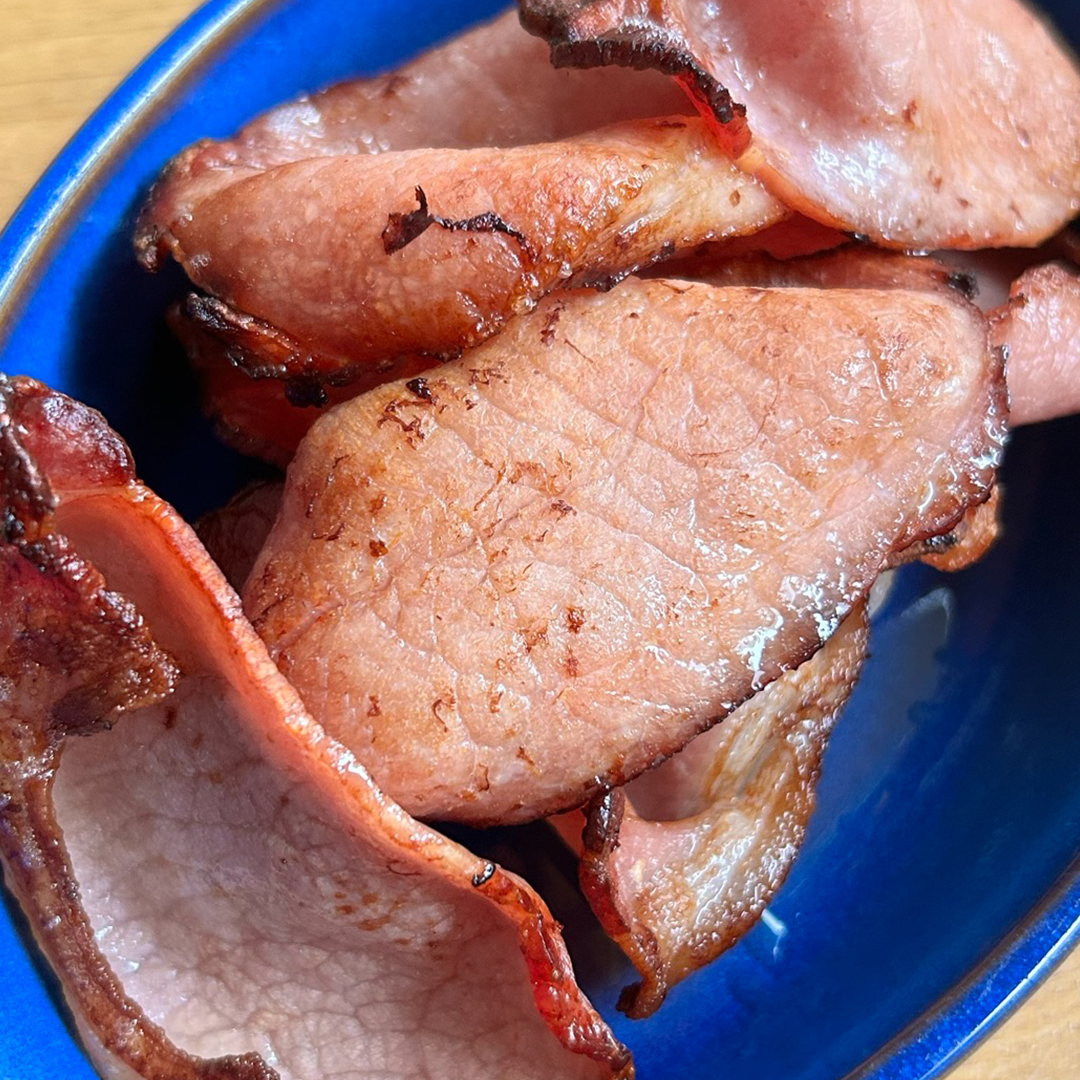
Image source: Simon Howie
A Technical Guide to Curing Your Own Back Bacon at Home
For the DIY enthusiast, curing back bacon at home is a rewarding project that allows for total control over salt levels and smoke profiles. It requires precision, particularly regarding food safety and nitrite concentrations.
Selecting the Loin
Start with a high-quality center-cut pork loin. Ensure it has a significant fat cap—at least a quarter-inch. If the loin is completely trimmed of fat, the resulting bacon will be dry and lack the characteristic flavor of a rasher.
The Nitrite Precision Rule
When curing meat, sodium nitrite (Pink Curing Salt #1) is essential for preventing botulism and providing the characteristic pink color. However, the concentration matters. According to technical data from the Smoking Meat Forums , the "Skin-on vs. Skin-off" status changes the math:
- Skin-off Loin: Requires approximately 200 Parts Per Million (PPM) of nitrite in the dry rub.
- Skin-on Loin: Requires only 180 PPM. This is because the skin does not absorb the nitrite, effectively concentrating the cure in the meat portion.
The Curing Timeline
"Patience is the most important ingredient in a traditional cure. You cannot rush the osmosis that transforms pork into bacon."
The process generally follows a 7-day cycle:
- Day 1: Apply the dry rub (salt, sugar, and curing salt) and vacuum seal or place in a heavy-duty zip-top bag.
- Days 2-6: Flip the bag daily to ensure the brine (which will form naturally) is evenly distributed.
- Day 7: Rinse the loin thoroughly under cold water and pat dry.
- The Pellicle Phase: Place the loin on a wire rack in the fridge for 24 hours. This develops a "pellicle"—a tacky surface that allows smoke to adhere better.
- Smoking (Optional): Smoke at a low temperature (around 200°F) until the internal temperature reaches 145°F.
Frequently Asked Questions
Is back bacon healthier than regular streaky bacon?
Generally, yes. Back bacon is significantly leaner than belly bacon. It contains more protein per gram and fewer calories from fat. However, it is still a cured meat, meaning it remains high in sodium. If you are looking for a high-protein breakfast option that feels substantial without the heavy grease of streaky bacon, back bacon is an excellent choice.
Can I substitute Canadian bacon for back bacon in recipes?
It depends on the recipe. If the recipe calls for cooked bacon bits (like in a salad), Canadian bacon works fine. However, if the recipe relies on the bacon fat to cook other ingredients (like frying eggs in bacon grease), Canadian bacon will fail because it has almost no renderable fat. For a traditional Full English breakfast, Canadian bacon is a poor substitute for a raw, fatty rasher.
Why is my back bacon releasing white liquid in the pan?
This is usually a sign of "pumped" bacon. Many commercial manufacturers inject a brine solution into the meat to increase its weight. When heated, this water escapes, carrying proteins with it that coagulate into a white foam. To avoid this, look for "dry-cured" back bacon, which has not been injected with water.
How long does back bacon last in the freezer?
When vacuum-sealed, back bacon can maintain its quality in the freezer for up to 9 months. If it is in standard grocery store packaging, it is best to consume it within 2-3 months to avoid freezer burn. Once thawed, it should be treated like fresh meat and cooked within 3-5 days.
What is the best way to get crispy edges on back bacon?
The secret is starting with a cold pan. Place the rashers in a cold skillet and then turn the heat to medium. This allows the fat in the "strap" to render slowly. As the fat liquifies, it will essentially shallow-fry the edges of the loin, giving you a crisp texture without drying out the center of the meat.
Key Takeaways
- Anatomy Matters: Back bacon is a hybrid cut of loin and belly, offering a meatier profile than streaky bacon.
- Regional Differences: What Americans call "Canadian bacon" is a pre-cooked loin medallion, whereas authentic back bacon is a raw rasher with a fat cap.
- The Butcher Script: You can source authentic cuts in the US by asking a butcher for a center-cut loin with the belly strap still attached.
- Cooking Science: Use the "anti-curl" nicking technique or oven-baking to ensure even cooking and moisture retention.
- Curing Precision: Home curing requires careful nitrite calculations (200 PPM for skin-off) and a 7-day fridge cure.
- The Bacon Butty: For the most traditional experience, serve rashers on buttered white bread with HP Brown Sauce.
Next time you are planning a weekend brunch, try swapping your usual strips for authentic rashers to experience the hearty, savory depth of traditional back bacon.